You hear the term “M2M” a lot these days in the tech industry, and it means different things for different people. Broadly, machine-to-machine communications is about connecting devices — virtually any kind of devices — to network applications.
But for me, one of the most interesting aspects of M2M is the ability to improve the lives of people with disabilities or impairments by bringing them network-based tools that were previously inconceivable.
Assisted Living Technology
You hear the term “M2M” a lot these days in the tech industry, and it means different things for different people. Broadly, machine-to-machine communications is about connecting devices — virtually any kind of devices — to network applications.

But for me, one of the most interesting aspects of M2M is the ability to improve the lives of people with disabilities or impairments by bringing them network-based tools that were previously inconceivable.
Assisted Living Technology
One of the biggest potential markets for connected devices is assisted living — applications to help elderly people live more independently and function better in their daily lives. The concept is based on “ambient intelligence,” or building environments that are aware of, and can monitor and respond to, the people living in them.
Last year, the European Union funded a pilot project to test out such technologies called “Mainstreaming on Ambient Intelligence,” or MonAMI. The project, developed by the Swedish Institute of Assistive Technology and a number of European service providers, universities, and technology providers, tested a wide range of ambient assisted living (AAL) technologies in the homes of elderly people in Spain, Slovakia, and Sweden.
The project aimed to demonstrate the value of these types of technologies, but also to show how a variety of systems and devices could work together in a real-world environment.
According to News-Medical.net:
“The trialled services use sensors, actuators and smart software as part of an ambient intelligent environment that communicates with users and carers via alarms, TVs, computers or mobile devices….
With applications such as DoorSure, WindowSure and DoorVue older trial users of the Monami system were automatically alerted if their door or windows were left unlocked and they could check via a camera who was ringing the bell. With AppSure they were reminded if they had left the kettle or cooker on. And with PresenceVUE and SUREZone carers were alerted in the event of an accident, a health problem or if something in the home appeared to be amiss.
Since the project ended in May 2011, the Monami partners have gone on to form part of the AAL Open Association (AALOA), an alliance of more than 40 AAL-focused European research projects set up to help create an open market for AAL technologies.”
Technology companies in the United States are also hard at work on AAL technologies, and indeed, many believe these technologies have the potential to transform healthcare. Earlier this year, Intel explored some of the possibilities of ambient intelligent technology on its online radio show, Future Lab. From the podcast:
“[Intel] has developed sensors that can gauge how long a person is in a kitchen, for example, and pretty accurately tell whether the person is cooking rather than skipping meals. Using context-aware sensors, it can also tell if they’re in the same room with their medication at the same time they’re supposed to take it. Sensors can track how fast a particular person walked through a room, and infer from that whether they’re losing their balance.”
Wearable Devices
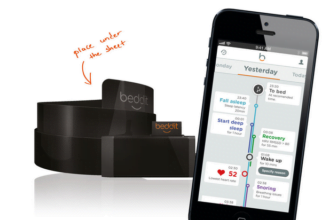
Dovetailing with ambient intelligence technologies, connected application developers are also building a new generation of “wearable” connected devices that can assist people wherever and whenever they need it. In fact, this is one of the fastest growing areas in M2M, and in technology in general.
According to a recent ABI Research study, home monitoring solutions for seniors will grow to more than 36 million units by 2017—up from less than 3 million units shipped as of 2011. Jonathan Collins, principal analyst at ABI research and author of the report describes the market potential:
“The ability to leverage wireless communications — either using short range or cellular — in a form factor that can be worn without restriction or discomfort will help extend the ability of seniors to live independently and care givers to provide crucial care. The potential of this market will bring in new players into the market from traditional specialists, to established healthcare device players, and a range of new start-ups looking to leverage device availability and broadband connections into senior’s homes.
“Connectivity suppliers, wearable device and health gateway vendors, online applications, and existing vertically integrated players are all ramping up their offerings to meet the demands of this growing market.”
One of the most interesting M2M applications I’ve seen recently is the Pictowatch by the Dutch technology company Beeldhorloge. The solution is designed for people with dyscrhony, who are unable to tell time, but could also be used by people with dementia or other cognitive impairments who need help with day-to-day tasks.
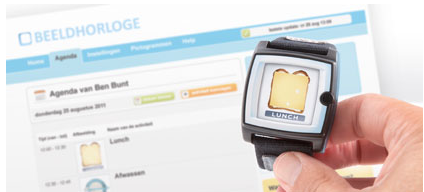
The watch works by presenting icons and photos at preset times to alert the wearer of an activity he or she is supposed to perform, such as taking medication or eating lunch.
Photo credit: Beeldhorloge
Enormous Potential Applications
These are just a few examples of the possibilities for connected devices — and the network services and application developers that enable them — to help individuals overcome disability and live fuller, more independent lives.
If you like this post, please read other posts in the series on the Person-Centered HealthCare main page.
And if you have a story to tell that may be a fit with our series, please comment below or email me at joan@socialmediatoday.com