We use cookies, including third-party cookies from Google to serve personalized ads through AdSense, to operate this site and understand how it is used. By continuing to browse, you accept this use. See our Privacy Policy and Terms of Use for details, including how to opt out of personalized advertising.
Accept
Health Works CollectiveHealth Works CollectiveHealth Works Collective
  • Health
    • Mental Health
  • Policy and Law
    • Global Healthcare
    • Medical Ethics
  • Medical Innovations
  • News
  • Wellness
  • Tech
Search
© 2023 HealthWorks Collective. All Rights Reserved.
Reading: Steering Patients Away From Cyberchondria [INFOGRAPHIC]
Share
Notification Show More
Font ResizerAa
Health Works CollectiveHealth Works Collective
Font ResizerAa
Search
Follow US
  • About
  • Contact
  • Privacy
© 2023 HealthWorks Collective. All Rights Reserved.
Health Works Collective > Policy & Law > Medical Ethics > Steering Patients Away From Cyberchondria [INFOGRAPHIC]
Medical EthicsWellness

Steering Patients Away From Cyberchondria [INFOGRAPHIC]

bwallace
bwallace
Share
2 Min Read
SHARE

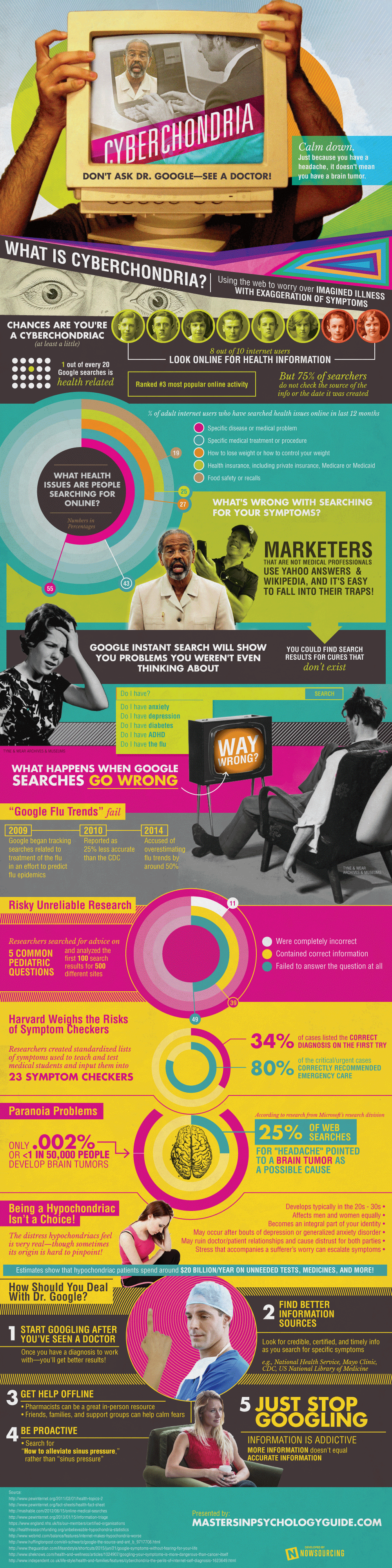
Smartphones are great. They give us directions when we are lost and keep us connected to our friends and family. It’s great having information at our fingertips at all times, but sometimes things can get carried away. Sometimes patients get the sniffles and the first thing they do is Google their symptoms to find out whether they are really dying of nose cancer. As it turns out, that’s really not so helpful after all for the patient or for the healthcare provider.

The problem with Googling symptoms instead of seeing a doctor is that patients don’t always know which sources are trustworthy. It’s really easy to get caught in a marketer’s trap to sell them the next miracle cure from the rainforest. Googling can be done responsibly if patients are using the search results to learn about a diagnosis they have already received from a doctor in order to have better care outcomes. But cyberchondria is becoming a real problem. Nearly a quarter of web searches for “headache” pointed to brain tumors as the cause, while brain tumors only occur in 0.002% of people. Too much information not taken into context can lead to unnecessary fear and anxiety. Learn more about how to steer patients away from falling into the cyberchondria trap from this infographic!

TAGGED:Googleinfographicpatient communication
Share This Article
Facebook Copy Link Print
Share

Stay Connected

1.5KFollowersLike
4.5KFollowersFollow
2.8KFollowersPin
136KSubscribersSubscribe

Latest News

Choosing a Beverly Hills Hyperbaric Center Means Checking Access and Transparency  -- AI-generated illustration
Choosing a Beverly Hills Hyperbaric Center Means Checking Access and Transparency 
Medical Innovations Technology
August 10, 2026
Mental Health Reimbursements Fail Emergency Departments -- AI-generated illustration
Mental Health Reimbursements Fail Emergency Departments
Hospital Administration Mental Health
August 6, 2026
Advances in Diagnostic Tools for Early Detection of Dementia -- AI-generated illustration
Advances in Diagnostic Tools for Early Detection of Dementia
Diagnostics
August 1, 2026
How Virtual Schools Deliver Therapy and Special-Education Support for Children With Disabilities -- AI-generated illustration
How Virtual Schools Deliver Therapy and Special-Education Support for Children With Disabilities
Health News Therapy
July 31, 2026

You Might also Like

financial health
NewsWellness

The Muddled Relationship Between Your Health Initiatives and Credit Score

July 25, 2019
Wellness

5 Health Benefits of Medical Marijuana You May Not Have Known

April 2, 2020
blood donor app
eHealthMobile HealthTechnologyWellness

Top mHealth Apps for September

October 22, 2014
eHealth

How Physicians Utilize Digital Media for Patient Interaction: Infographic

October 10, 2012
Subscribe
Subscribe to our newsletter to get our newest articles instantly!
Follow US
© 2008-2026 HealthWorks Collective. All Rights Reserved.
  • About
  • Contact
  • Privacy
Welcome Back!

Sign in to your account

Username or Email Address
Password

Lost your password?