Is it possible that health care can become more effective, more personalized, more attuned to real health and wellness in a manner that truly benefits you the customer?
At the recent health and wellness conference celebrating the 20th anniversary of the University of Maryland Center for Integrative Medicine there was a panel discussion moderated by Center director Brian Berman, MD on the topic of health care of the future. Here are some excerpts from the comments made by Dr. Delia Chiaramonte, Dr. Jeff Bland and myself.
Is it possible that health care can become more effective, more personalized, more attuned to real health and wellness in a manner that truly benefits you the customer?
At the recent health and wellness conference celebrating the 20th anniversary of the University of Maryland Center for Integrative Medicine there was a panel discussion moderated by Center director Brian Berman, MD on the topic of health care of the future. Here are some excerpts from the comments made by Dr. Delia Chiaramonte, Dr. Jeff Bland and myself.
The first question was what are the problems with the health care system today? Here are some of the responses:
There is excellent research and innovation along with superb providers in this country. But the delivery system is dysfunctional and to date America has tolerated this dysfunction. It’s a medical care not a health care system. The emphasis is strongly on disease management and not disease prevention or health promotion. American medical care is very expensive, about $8,000 per capita and yet outcomes are not what they could or should be. For example,Americadoes not have the lowest infant mortality rate nor the longest life span. Other developed countries beat us on both counts. Medical care of acute illness is generally quite good in theUnited Statesbut chronic diseases – of which there are more and more occurring – are not well cared for. The system is provider oriented rather than patient oriented and the patient is not the real customer.
There is a shortage of primary care physicians and this is getting worse every year. Only 30% of American physicians are primary care physicians compared to about 70% in most other developed countries. Those still in primary care practice have inadequate understanding of the causes and prevention of chronic diseases. And too few appreciate the importance of care coordination nor the full range of non-pharmacologic options for care.
The second question was what can patients do to get the best possible health care? Among the responses, here are a few:
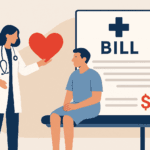
Since today the patient is largely not the customer of the doctor, a good place to start is to change that paradigm. A high deductible health policy means that the patient will now be paying the primary care physician directly for care and thus this changes the professional-client relationship to a more normal occurrence. The physician will now become more attentive, allocate more time, offer more preventive care and will coordinate the care of chronic illnesses.
Individuals also need to take more responsibility for their health and wellness directly. Attention to nutrition, exercise, stress and tobacco are key first steps. Work place wellness programs can materially assist. They can offer a health care premium deduction in return for engaging in added educational programs to improve lifestyles.
Social networking can have an increasingly beneficial effect. Lifestyle changes are easier to accomplish in a peer group setting. Usually we think of this as a physical group setting but it can also be done through the use of social media. Groups help give a positive reinforcement for behavior change.
Social networking through sites such as Facebook, Twitter or You Tube or others can be used to leverage the medical care delivery system to become more patient centered, more effective at the coordination of chronic illness, more attuned to prevention and responsive to true integrated medicine.
Everyone should have a primary care physician, one well schooled in the most current evidence-based care approaches yet who is attuned to the full gamut of integrative medical approaches such as chiropractic, nutrition, personal training, massage therapy, and acupuncture. You need to be sure that your primary care physician will spend the time needed to deal with health and wellness and not just disease. You may well need to pay your primary care physician directly rather than buy insurance but the primary care physician will then be financially able to offer you the time you really need and deserve.
The third question was what will the health care provider of the future be like and how will integrative medicine contribute to health care in the future?
This question was addressed in an earlier post; go to this link.
You deserve superb integrative health care but to get it you will need to take some action to obtain it. Call it a balancing of rights with responsibilites. It may cost you dreictly rather than via insurance but you may well find that the return on investment is well worth it. You can find much more discussion of this topic in The Future of Health Care Delivery – Why It Must Change and How It Will Affect You.
Note: You can find the Center for Integrative Medicine on Facebook at http://on.fb.me/HWRPKp