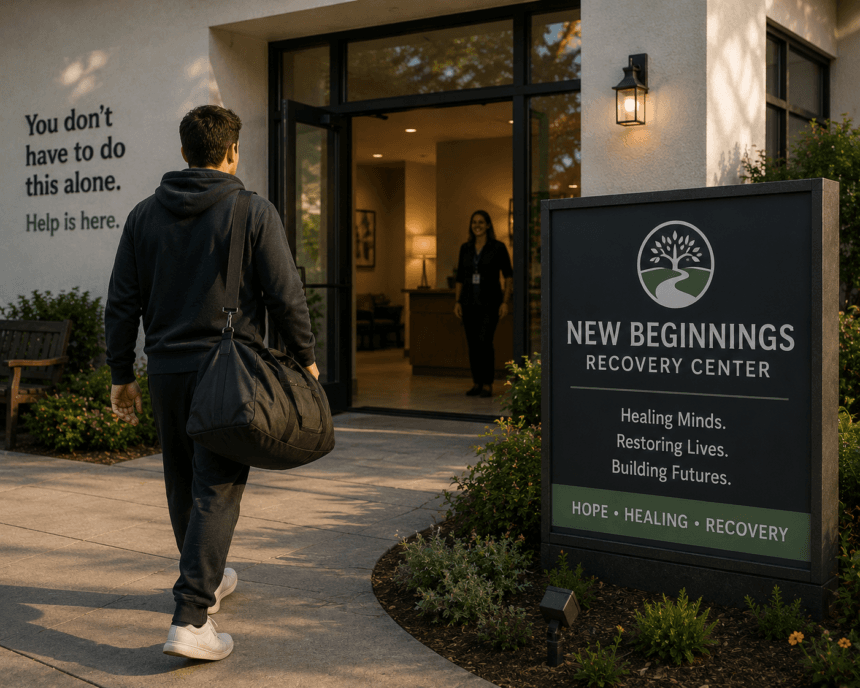
There are a lot of topics we cover on Healthworks Collective, but one of the most important is on addiction recovery. It is a subject that affects families, workplaces, hospitals, and communities in ways that are often hard to measure. Another thing people should understand is that outpatient addiction treatment can give many patients a path to recovery without requiring them to step away from every part of daily life.
- Benefits of Outpatient Addiction Treatment
- 1. The Rehab Assumption That Needs Revisiting
- 2. What Outpatient Day Treatment Actually Looks Like
- 3. Why Staying Connected to Real Life Matters in Recovery
- 4. The Working Adult Case for Outpatient Care
- 5. Dual Diagnosis: The Treatment Gap That Outpatient Programs Fill
- 6. Medication-Assisted Treatment: A Tool, Not a Shortcut
- 7. Same-Week Access and Why Timing Is a Clinical Issue
- 8. What to Look For in an Outpatient Program Near Milford, MA
- Recovery That Fits a Real Life
The Office of Disease Prevention and Health Promotion reports that more than 20 million people in the United States have a substance use disorder, and most of them do not get the treatment they need. It is why the Office of Disease Prevention and Health Promotion shares this guidance: “Strategies to prevent drug and alcohol use at the school, family, and community level are key to reducing substance use disorders. Increasing non-opioid pain management may also help prevent opioid use disorder. And interventions to help people with substance use disorders get treatment can help reduce related health problems and deaths.” Keep reading to learn more.
Benefits of Outpatient Addiction Treatment
David Eddie and John Kelly at Strat News show that recovery is not rare, even when addiction can feel overwhelming to the people facing it. “First off, this study found that 22.3 million Americans have overcome an alcohol or other drug problem — that’s 9% of U.S. adults at the time we did the survey! That nearly 1 in 10 U.S. adults have overcome a substance use problem is testament to the fact that not only is addiction recovery possible, it’s common. To further contextualize this finding, in the year these data were collected (2015), there were more people who endorsed having resolved an alcohol or other drug problem in the U.S. than had an active alcohol or other drug use disorder (22.3 million vs. 20.8 million).” Eddie and Kelly say.
Outpatient treatment can be helpful because it lets people receive counseling, medical support, group therapy, relapse prevention help, and recovery planning while still living at home. You can often keep working, caring for children, attending school, and staying connected to supportive loved ones during treatment. There are also benefits for people who need a lower-cost option than residential care or who are stepping down from a more intensive program. Something that makes outpatient care especially useful is that patients can practice recovery skills in real life while still receiving structured support.

There is a version of addiction treatment that most people picture when they hear the word rehab. It involves leaving home, checking into a facility somewhere far away, and stepping completely out of ordinary life for weeks or months at a time. For some people, that model is exactly what they need. But for a growing number of adults dealing with substance use disorders, it is not the only path forward, and research increasingly shows it may not even be the most effective one.
Outpatient addiction treatment has matured significantly over the past decade. The clinical structure, the therapeutic approaches, and the outcomes data have all evolved in ways that challenge older assumptions about what serious recovery looks like. Understanding how outpatient programs actually work, and what sets a strong one apart from a weak one, helps people make more informed decisions at one of the most important moments of their lives.
1. The Rehab Assumption That Needs Revisiting
The idea that inpatient or residential rehab is inherently “more serious” than outpatient care is one of the most persistent myths in addiction treatment. It comes from a reasonable place. If someone is struggling badly enough, the thinking goes, they need to be removed from their environment entirely and placed somewhere safe. That logic makes sense in specific circumstances, particularly when someone is at medical risk during detox, has no stable housing, or has exhausted outpatient options previously.
But for many adults, the opposite turns out to be true. Remaining embedded in their real lives, their jobs, their family relationships, their communities, while simultaneously working through an intensive clinical program, actually builds stronger long-term recovery outcomes. It forces patients to apply the skills they are learning in real time, not in a controlled environment they will eventually have to leave.
That is the core rationale behind outpatient day treatment, and it is why anyone exploring addiction treatment resources near Milford, MA should not automatically rule out outpatient as the less serious option.
2. What Outpatient Day Treatment Actually Looks Like
There is a wide range of what the term outpatient covers. At the lower end, it might mean meeting with a counselor once a week. At the higher end, it means full-time day treatment, sometimes called Partial Hospitalization Programs or PHP, where a person spends five or more hours per day in structured clinical programming, multiple days per week.
Full-time day treatment at a quality outpatient program typically includes a combination of the following:
- Individual therapy sessions with a licensed clinician, focused on identifying the underlying drivers of substance use
- Clinician-led group therapy, which builds peer accountability and teaches shared coping strategies
- Medication-Assisted Treatment (MAT) for those dealing with opioid or alcohol use disorder
- Dual diagnosis assessment and integrated care for co-occurring mental health conditions like anxiety, depression, or trauma
- Relapse prevention planning, including concrete tools for managing triggers in daily life
The clinical depth in these programs is comparable to what someone would receive in a residential setting. The key difference is that patients go home at the end of the day. That might sound like a limitation. In practice, it is often an asset.
3. Why Staying Connected to Real Life Matters in Recovery
One of the things that addiction does is erode a person’s sense of identity outside of their substance use. Recovery, at its core, involves rebuilding that identity. And that rebuilding is much harder to do in isolation from the environment where it actually needs to hold up.
When someone goes through a residential program and then comes home, they face what is sometimes called the “re-entry problem.” They have learned a lot. They have put in real work. But they are suddenly back in the same environment, with the same relationships and stressors, now armed with skills they have never had to use in that specific context. That transition is one of the most vulnerable moments in recovery.
Outpatient treatment sidesteps that problem. Patients practice their recovery skills in real time, going home each evening and returning to the program the next day with actual experiences to process. That daily feedback loop, between clinical work and lived life, tends to produce more durable results.
4. The Working Adult Case for Outpatient Care
One of the most common reasons adults delay seeking help for addiction is the belief that treatment requires putting their entire life on hold. For someone who has a job, a family, or financial obligations that cannot wait, a multi-week residential stay can feel impossible. That fear keeps people in harmful situations far longer than necessary.
Intensive outpatient and partial hospitalization programs are designed specifically for people in this situation. Many programs offer flexible scheduling built around work hours, so patients can attend treatment in the mornings or afternoons while maintaining their employment. The structure makes real treatment accessible to people who assumed they had to choose between getting help and keeping their lives intact.
That accessibility matters clinically, not just logistically. Someone who can afford to get treatment without losing their job or their home is starting recovery from a much more stable foundation. Stability is protective in addiction treatment. Programs that support it tend to produce better outcomes.
5. Dual Diagnosis: The Treatment Gap That Outpatient Programs Fill
Research consistently shows that the majority of people with substance use disorders also have at least one co-occurring mental health condition. Anxiety disorders, depression, PTSD, and ADHD are among the most common. When only the addiction is treated without addressing the underlying mental health component, the risk of relapse remains high.
Quality outpatient programs offering addiction treatment Milford MA residents can access include integrated dual diagnosis care as a standard part of their clinical model. That means psychiatrists, therapists, and addiction counselors collaborate on a single treatment plan. A patient dealing with both opioid use disorder and untreated depression, for example, receives coordinated care for both conditions simultaneously.
This matters because addiction and mental health conditions interact. Substance use frequently develops as an attempt to self-medicate symptoms that have never been properly diagnosed or treated. Treating only the surface behavior without examining that history produces limited and fragile results.
6. Medication-Assisted Treatment: A Tool, Not a Shortcut
Medication-Assisted Treatment remains one of the most misunderstood components of modern addiction care. Some people see it as swapping one substance for another. That framing misrepresents what MAT actually does and how it works clinically.
For opioid use disorder, medications like buprenorphine reduce cravings and prevent withdrawal without producing the euphoric effect of opioids. For alcohol use disorder, medications like naltrexone reduce the rewarding response to alcohol. These medications stabilize brain chemistry enough for a person to engage meaningfully in therapy, which is where the actual behavioral work of recovery happens.
MAT is most effective when it is part of a broader clinical program that includes therapy and case management. Outpatient programs providing addiction treatment Milford MA patients seek to integrate MAT as one component of a larger treatment plan, not as a standalone solution.
7. Same-Week Access and Why Timing Is a Clinical Issue
There is a window of motivation that opens when someone decides they are ready to get help. It can close quickly. Research on addiction treatment engagement consistently shows that the longer the delay between a person deciding to seek treatment and actually starting it, the lower the likelihood they follow through.
This is not a character issue. It is neuroscience. Ambivalence is a normal part of addiction, and the readiness to seek help is often a narrow and fragile moment. Programs that offer same-week or rapid admissions protect that moment. When someone has to wait two or three weeks for an intake appointment, many of them do not make it to the start date.
8. What to Look For in an Outpatient Program Near Milford, MA
Not all outpatient programs are built the same way. The difference between a high-quality program and a mediocre one can significantly affect outcomes. Anyone evaluating options for addiction treatment Milford MA should ask specific questions before making a decision. Key indicators of a strong outpatient program include:
- Licensed clinical staff with specific training in addiction and co-occurring mental health disorders
- Integrated dual diagnosis assessment built into the intake process, not offered as an afterthought
- Medically supervised MAT support where clinically appropriate
- Flexible scheduling options that accommodate employment and family obligations
- Rapid intake and same-week admissions to reduce the gap between decision and treatment
- A clear continuum of care plan, meaning a defined path from higher-intensity programming down to ongoing outpatient support
Massachusetts has a strong network of behavioral health providers, and the MetroWest region in particular has seen growth in accessible outpatient services. The right program is one that matches the clinical needs of the individual, not one that defaults to the most intensive or the most convenient option available.
Recovery That Fits a Real Life
The conversation around addiction treatment Milford MA residents navigate is changing. Outpatient day treatment is no longer seen as the “easier” path or the choice for people who are not really serious about getting better. For many adults, it is the most clinically sound option available, and the one most likely to produce lasting results.
What makes recovery stick is not how far someone travels or how long they stay away from home. It is the quality of the clinical work, the integration of mental health care, the support structure around them, and their ability to practice recovery skills in the life they are actually going back to. Outpatient programs, at their best, are built around exactly that principle.
Anyone evaluating options for themselves or someone they care about deserves accurate information about what these programs offer. The assumption that more intensive always means more effective is worth questioning. For a lot of people, the most effective treatment is one they can actually access, sustain, and build a real life around.