I’ve been toiling in the field of connected health for 20 years now, watching for signs of adoption that will move us into the steep part of the curve. I have to wonder, with announcements from several huge consumer companies recently, if that time is coming.
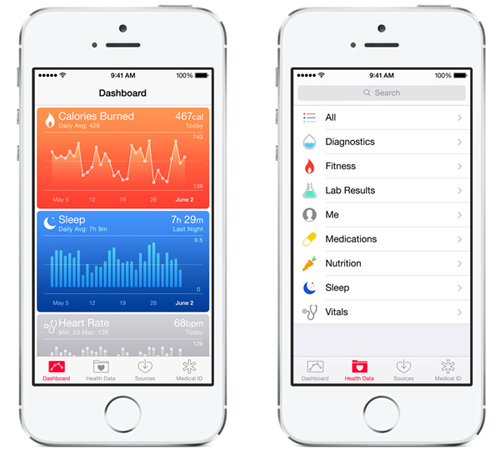
By now you’ve heard about Apple’s HealthKit announcement (my thoughts on this detailed here), which involved not only Apple, but Mayo Clinic and Epic.
I’ve been toiling in the field of connected health for 20 years now, watching for signs of adoption that will move us into the steep part of the curve. I have to wonder, with announcements from several huge consumer companies recently, if that time is coming.
By now you’ve heard about Apple’s HealthKit announcement (my thoughts on this detailed here), which involved not only Apple, but Mayo Clinic and Epic.
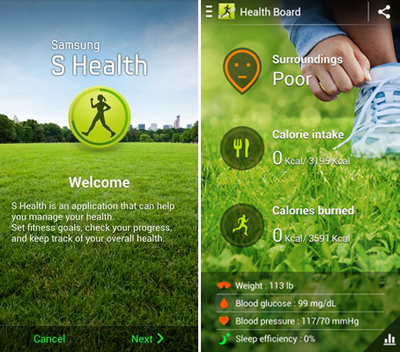
Samsung is not sitting still, having released increasingly sophisticated versions of their S Health app.
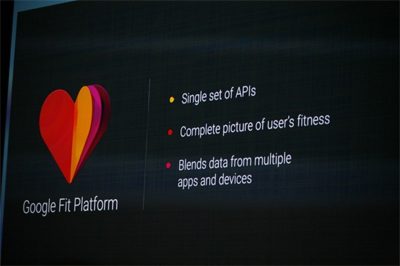
Rumor has it that Samsung will also be coming out soon with the next version of their Galaxy Smartphone accompanied by a developers’ toolkit for health apps. Google will be launching Google Fit.
Some of this exuberance (is it rational?) also involves excitement around wearables, and the intersection of mHealth and wearables is an area of particular interest. To wit, Microsoft is rumored to be introducing a smartwatch this fall, amid lots of interest at Google, Apple and Samsung in the role of the smartwatch in mHealth.
OK, you get the picture. Any analyst worth her salt has got to be predicting a break-out year for mHealth. The mHealth market is said to have been $1.95B in 2012, growing to $49B by 2020; the wearables market is predicted to be $12B by 2018, of which 60% will be health tracking. We just coined a new term, the Internet of (Healthy) Things to describe this convergence.
What’s not to like here? Well, I’m not sure, but there are some reasons to be cautious. Better still, there are some things we must get right as we steward this amazing opportunity to harness a game-changing technology (mobile) and apply it to the laudable goal of improving the health of our citizens.
First the words of caution. My friend Nancy used to tell me she hated to be the skunk at the picnic, and those words ring true here. But allow me a couple of comments contrary to all of the enthusiasm. As noted previously, if HealthKit is just another place to store health-related data — moving from a web application to a mobile phone — do we really think consumers are going to jump for joy? Santayana said, “Those who do not learn from history are doomed to repeat it.” Did we learn the lessons from Google’s failed PHR? From Microsoft’s HealthVault? If you build it, they do not necessarily come. For health, it has to be more compelling than that.
Here are some facts that remind us of the challenge:
- Although one out of ten U.S. adults over the age of 18 owns an activity tracker, within six months, one-third stops using it.
- More than 80% of health apps (like Lose It! or MyFitnessPal) that are downloaded are abandoned within two weeks.
- Also of note, Aetna discontinued CarePass last week, seemingly because their members weren’t enthralled by it.
Most app development is based on the adage, “Give the people what they want.” Snapchat, Instagram, Tinder, etc., are all designed to meet a basic human need in a very simple way. The challenge in health care is that, though we know what patients/consumers need to do to improve their health, most of them don’t want to hear about it. That makes building ‘sticky’ health apps and devices much tougher than a messaging or photo sharing app.
Today, most health care app development is still confusing education with inspiration. They are not equivalent! I’ve told the story before about how we check our smartphones 150 times per day. But in a blood pressure monitoring study at the Center for Connected Health, we had difficulty getting patients to push one button once a day to participate in a program their doctor enthusiastically recommended for them.
What, then, do we do to take full advantage of the opportunity that Samsung, Apple, Google and others are providing us? The answer, simple and yet elusive, is: Focus on Engagement
Over these 20 years, I’ve seen technologies come and go, trends take hold and others fade away. We are learning a great deal about how to empower patients to self-manage their health, and what to do with all of this patient-generated data. The common denominator, the one critical element we must get right, is how to ‘sell’ health to consumers and keep them coming back for more. I say it’s got to be personal, motivational and ubiquitous. What do you say?