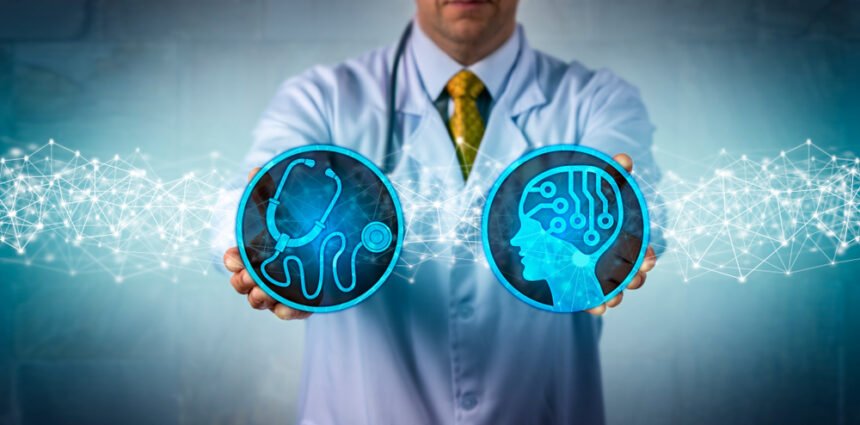
Medicine moves slowly — until it doesn’t. Sometimes, a technology like CRISPR comes along that changes the treatment landscape for dozens of conditions.
Right now, that dynamic is true of artificial intelligence. From cancer research to drug development to treatment personalization, AI is making possible all sorts of breakthroughs medical experts thought impossible a few years ago.
Where is AI making the biggest difference? These five areas of medicine are getting the treatment:
COVID-19 Diagnosis & Treatment
It’s no secret: COVID-19 tests are in short supply. There are simply too many patients who may have the disease for the number of tests available.
The trouble is, understanding who’s been infected is part and parcel of containing the virus. With too few tests to go around, researchers have turned to AI.
Experts at life sciences firm ZOE, Massachusetts General Hospital, and King’s College of London have put their heads together to develop an AI-based diagnostic model. Based on the patient’s symptoms, the system predicts whether or not the patient has the virus. Although it’s not perfectly accurate, the AI tool is noninvasive, inexpensive, and infinitely scalable.
What about a COVID-19 vaccine? A safe, effective one is, unfortunately, still a long way off.
To speed development, researchers are turning to AI. A good example is Rosetta, developed by the University of Washington’s Institute for Protein Design. Long before anyone had gotten a good look at the virus in a laboratory setting, Rosetta had modeled it in software. It’s not a vaccine, to be sure, but it’s the start of one.
Stroke Diagnosis
When a stroke is suspected, time is short. Every minute a stroke goes undetected is one in which the brain’s tissues suffer.
But the question isn’t just whether a stroke has happened; if it has, it’s where that stroke occurred. And some types are tough to spot even for stroke specialists.
Looking for a better system, Johns Hopkins University and Stanford doctors trained a machine learning model on CT scans. Using convolutional neural networks, the system correctly identified an ischemic stroke 85% of the time.
Heart Disease Diagnosis
Despite diet and exercise education campaigns, nearly half of Americans have some type of heart disease. Given that diagnosing heart disease is expensive, too few Americans are getting tested.
The good news is, an easier cheaper method was just approved by the FDA. Using AI, the cardiac ultrasound software allows generalist doctors to get an in-depth look at how a patient’s heart is functioning. Although patients with serious heart disease will still be referred to specialists for the foreseeable future, the AI tool could help others prevent it from worsening.
Breast Cancer Detection
Mammography is notoriously prone to errors. Malignancies are easy to miss, and lumps appear even in healthy breast tissue.
To help radiologists get a better look and better focus, CureMetrix developed cmTriage. While the average radiologist operates with an 84% sensitivity and recalls 9.6% of cases, cmTriage flags just 8.2% of cases at that sensitivity. cmTriage can also operate at a default sensitivity of 93% and as high as 99% depending on the preference of the practice.
Cleared by the FDA, cmTriage works with all breast densities, masses, and calcifications. Although the tool doesn’t replace radiologists, it does help them sort and prioritize mammograms so they can quickly give their attention to the cases that need it the most.
Outpatient Monitoring
After a patient leaves their doctor’s office, they’re typically turned loose until their next visit — which may be months down the road. But outpatient monitoring is critical for diseases ranging from heart disease to Alzheimer’s.
What does that have to do with AI? Machine learning is beginning to find its way into wearables. Together with Mercy Virtual, Myia Health has developed a kit that helps doctors understand how patients with diabetes and heart failure are faring at home.
With a PPG ring, an ECG patch, a few other tools, the kits automatically collect and report data to patients’ doctors. If a patient’s condition seems to be getting worse, doctors can bring them back in for a checkup.
Artificial intelligence is making medicine more accessible, affordable, and accurate in its diagnoses. And while the work to defeat diseases like COVID-19 and cancer continues, AI is giving healthcare leaders a lift when and where they need it most.
Potential title: 5 AI Hotspots In Medicine To Know About
Tagline: Take note of these AI hotspots in medicine and the ways they can make a difference.