
When kids are growing up, they are usually taught certain jobs are prestigious and bring great rewards. Astronauts, firefighters, and athletes are perhaps three of the most acclaimed occupations in the U.S. Adults talk about all the positives of these fields with their kids but sometimes skip over the drawbacks.
Arguably no job is more stressful and important to do just right than being a health care worker. Doctors, nurses, and even receptionists at hospitals are all intense jobs to fulfill. People who decide to do these things are under high amounts of pressure and often don’t get talked about by others.
Car insurance for health care workers is higher, and the times you are on the clock are varied. We’ll cover these and several other reasons why being in the field of medicine is one of the most stressful jobs in the world.
#1 – Health Care Workers Handle Deadly Situations
When many people go to work, they don’t have to worry about affecting other people in a dramatic way. Getting someone’s order wrong at the drive-thru might make someone angry, but it’s not a life-or-death scenario (even though some customers act like it is).

On the other hand, being a medical worker really does come with potentially fatal consequences for patients if the doctor is not perfectly thorough in their analysis of the problem.
Even when medical professionals know exactly what they are doing, and they have given their patients their best effort, the outcome is sometimes fatal. This can bring a lot of guilt to health care workers, especially if they are newer and want to prove to themselves they can save lives.
Health care workers need to focus on what they can control. It doesn’t help when family members of patients put undue pressure on doctors and nurses. On the outside, it seems like these people can solve any problem and cure any disease, but they are human. Only so much can be done to save someone’s life.

#2 – Health Care Workers Have to Evolve
Medicine is a field constantly changing and evolving into something different. People who got their medical degrees decades ago have to keep up with the most recent research to treat their patients properly.
The way people were treated for things like diabetes, heart disease, strokes, and dementia are all different than they were decades ago. New medicines and methods allow patients to live comfortably and healthily.
Older doctors who are stubborn in their approach might find themselves losing out on patients to some of the newer and more innovative health care workers in their area. Other jobs may be more lenient to workers who have a hard time changing and incorporating technology into their daily lives because the stakes are not as high.
If health care workers ignored these changes, they’re potentially making it harder to save their patients’ lives.
Advances in Technology
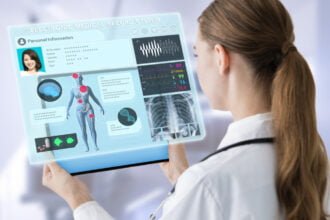
Health care workers also have to keep up with advances in technology that have shaped our world now. Cloud computing, electronic records, VR headsets used to practice medical procedures, and more are all some of the tools that require a stressful learning curve that people in other professions don’t have to worry about as much.
This includes interacting with patients on social media. Especially in the time of COVID-19, it has become vital for health care workers to stay in contact with their patients online. Telephone access is also crucial because some older patients don’t want to hassle with learning how to use online apps.
Doctors and nurses have to always be ready to answer questions from different lines of communication. Receptionists can be hired to alleviate the pressure on these folks, but even they can struggle to understand the changes in communication practices. Not knowing how to adapt to these new lines of communication will leave health care workers in the dust.
Patients should try to understand how difficult this is for their older providers who have been doing things a certain way for a long time. Once again, other jobs give you more flexibility and time in learning how their industry is changing.
#3 – Health Care Workers Have to Be Kind
Health care requires a quick understanding of what is relevant at the moment so patients can feel comfortable telling their doctors what is wrong with their health. The social skills needed, along with the knowledge of the medical field, are a unique combination other jobs simply don’t require.
Bedside manner, or the relationship between the doctor and the patient, is equally important to competence. Health care workers who don’t understand this are left in the dust by those who have this skill set.
You really can’t have a day where you don’t want to be a listener or where you can’t recall the information you learned in medical school. Everything needs to come together at once to provide the proper care for patients.
#4 – Some Health Care Workers Have Higher Car Insurance
Car insurance companies are often worried about how stressed out their customers are. Driving when under pressure presents a risk of getting into an accident, and insurance companies want to avoid this scenario.
This means health care workers may face higher insurance premiums than others because of their stress levels. This creates a cycle of increased stress, as the higher rates may make customers feel even more stressed.
It is important for medical professionals to prove they are great drivers by never getting tickets and paying for all their premiums on time. If they prove they are not a risk in other ways, such as by having a clean driving record, their profession should become less important.
#5 – Health Care Workers Often Face Lawsuits
Many people know health care workers and hospitals have a lot of money. In turn, some folks are always looking to file a lawsuit against health care organizations and specific providers, even if the care they received was great.
The amount of time it takes to cut through the red tape in these scenarios can get frustrating. It takes time out from what really matters: serving the patients. There are many attorneys who specialize in protecting health care workers from lawsuits, so all medical professionals should make this a priority.
Hopefully, it has become clear that being a medical professional is highly stressful work. Patients should try their best to make the lives of health care workers easier, and they will get better treatment in return.