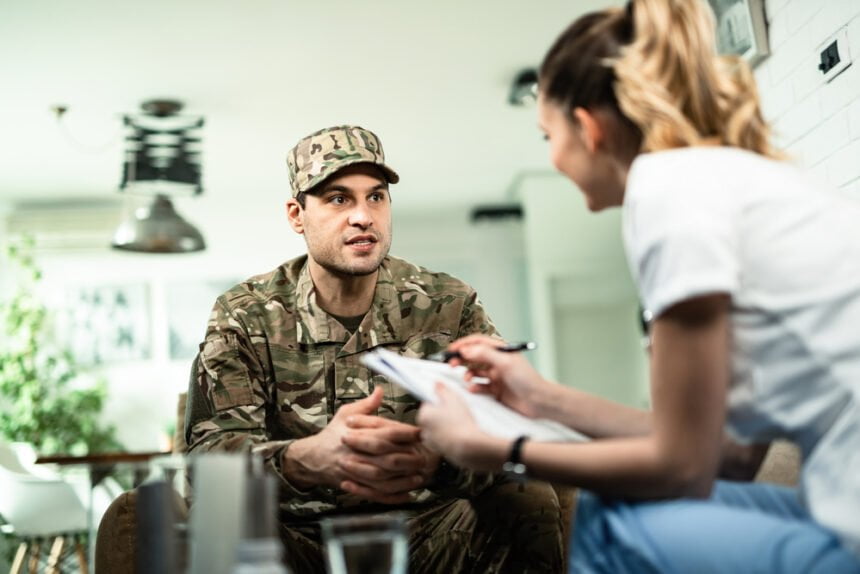
Serving in the military, and especially in combat roles, is almost synonymous with peril and injury. Injuries and recurring health issues can become facts of life during training, transport and certainly while serving on the front lines. For many veterans, health issues become something they are forced to live with for the rest of their lives and often act as obstacles to employment, housing, travel, relationships and much more. From an employer’s perspective, there are many ways to help accommodate veterans that come into the workplace with psychological and/or physical health issues.
Rehabilitation Care
Rehabilitation care is often necessary for veterans with both mental and physical issues. Bodily and psychological trauma are common in veterans, especially those that served on the front lines, but injury and health hazards can be present anywhere. Physical rehabilitation, depending on the injury, is focused on providing vets with a better quality of life and increased independence. Rehab care might be focused on helping veterans regain mobility or learn to live without the use of a limb.
These rehabilitation programs are not always entirely covered by the government post-discharge, which means there is ample room for employers to step up and provide benefits aimed at subsidizing the cost of such care. Employers can also help veterans by providing bridge benefits while waiting for other care and benefits programs to kick in.
PTSD
Post Traumatic Stress Disorder, also archaically referred to as “shell shock”, is a symptom of having witnessed or experienced a traumatic event. PTSD comprises a variety of symptoms of varying duration and intensity depending on the person and can manifest as intrusive thoughts, self-isolation, recurring negative thoughts and feelings, and exaggerated startle response.
More Read

Treating PTSD is usually done therapeutically in a clinical setting and/or combined with social support and medication. Employers should be attentive to these needs in their veteran employees and ensure benefit offerings reflect this common and potentially debilitating condition.
Amputations
Modern medicine combined with advanced protective equipment allows soldiers to survive explosions and other injuries that would have claimed their lives in previous generations. However, these procedures often end up leaving veterans with not only mobility issues but psychological ones concerning body image and even employability.
In this way, accommodating veterans who have undergone amputation surgery due to injuries sustained in the line of duty can be included under the umbrella of inclusion. Making inclusivity a priority where veteran employees are concerned means, when and where possible, making changes to infrastructure, training and perhaps job requirements to allow veterans with amputations to work.
Chronic Pain
Chronic pain is reported by the majority of veterans, and diagnosis and treatment are essential for reestablishing comfort and quality of life. Anyone who has lived with and had to address chronic pain understands how these needs become paramount in one’s daily life, and particularly how it complicates one’s ability to work.
Companies seeking to provide relief to their veteran employees must consider the central role that pain can play in post-military life and make additions and adjustments to benefits coverage accordingly. Allowing flexibility in the allocation of benefits can go a long way to helping veterans make the best use of available allotments.
Conclusion
Veteran health issues, whether psychological, physical or a combination of both, can plague service men and women for the rest of their lives. Many suffer in silence, while the suffering of others is more out in the open. As veterans ease back into civilian life and reintegrate into the civilian workforce, they bring with them a unique host of health problems and healthcare needs that businesses must understand and be ready to respond to.