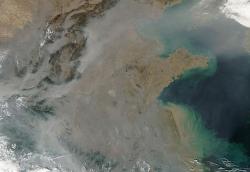
 Outside air pollution causes cancer and is a major risk to health in general, the World Health Organization (WHO) concluded today.
Outside air pollution causes cancer and is a major risk to health in general, the World Health Organization (WHO) concluded today.
This is the first time that WHO has officially classified outdoor air pollution as carcinogenic, even though it has been known for years to increase an individual’s risk for a range of diseases, including respiratory and heart diseases. Exposure levels to air pollution have increased significantly in recent years, the agency reported, particularly in rapidly industrializing countries with large populations.
“The air we breathe has become polluted with a mixture of cancer-causing substances,” Dr. Kurt Straif of WHO’s specialized cancer agency, the International Agency for Research on Cancer (IARC), stated in a press release.
IARC’s assessment applies to all regions of the world, despite varying composition and levels of exposure.
Current Lung Cancer Rates
Lung cancer begins in the lungs and may metastasize (spread) to lymph nodes or other organs in the body, such as the brain. Cancer originating in other organs may also metastasize to the lungs. Two main types of lung cancer, which grow in very different ways, exist: small cell and non-small cell lung cancer. Non-small cell lung cancer is more common than small cell lung cancer. In the U.S., 205,974 people were diagnosed with lung cancer in 2009, the most recent statistical year, while 158,081 people died from it.
One positive note: after steadily rising for decades, lung cancer rates are now decreasing nationally in tandem with decreasing use of cigarettes. In fact, smoking cigarettes is the number one cause of lung cancer though there may also be other causes. A family history is a significant factor that may cause or increase an individual’s risk of developing lung cancer. These would include use of other types of tobacco (such as pipes or cigars), breathing secondhand smoke, exposure to substances such as asbestos or radon… and now, according to WHO, exposure to outside air pollution.
Air Pollution
Predominant sources of outdoor air pollution are transportation, stationary power generation, industrial and agricultural emissions, and residential heating and cooking.
Sufficient evidence exists that exposure to outdoor air pollution causes lung cancer and increases risk of bladder cancer, IARC stated. In fact, the most recent data indicate that in 2010, 223,000 deaths from lung cancer worldwide resulted from air pollution. Particulate matter, a major component of outdoor air pollution, was evaluated separately and was also classified as carcinogenic to humans.
These results, published in Volume 109 of the IARC Monographs, are based on review of more than 1,000 scientific studies conducted on five continents to analyze the carcinogenicity of various pollutants present in outdoor air pollution. Findings are based on studies of millions of people living in Europe, North and South America, and Asia. The mission of IARC is to coordinate and conduct research on the causes of human cancer and to develop scientific strategies for cancer control.
“There are effective ways to reduce air pollution,” IARC Director Dr. Christopher Wild stated in a press release, “and, given the scale of the exposure affecting people worldwide, this report should send a strong signal to the international community to take action without further delay.”
(image: NASA)