
Do you have a vision disorder? You aren’t alone. Over 6 million people have vision problems.
There are many reasons people develop vision disorders. Genetic factors are fairly significant. Lifestyle changes can also lead to vision problems.
Living with vision disorders can significantly impact daily life. You have to deal with navigating physical spaces and reading and accessing information. Sadly, people struggling with vision impairments often face problems that can affect their independence and quality of life. Simple tasks like reading labels, recognizing faces, or even crossing the street safely can become daunting.
Furthermore, the social stigma people with vision disorders face can cause them to feel isolated exacerbating the emotional toll of the condition. Fortunately, advances in technology can offer promising solutions to mitigate these challenges. From screen readers and magnification software to innovative wearable devices and navigation apps, technology has the potential to enhance accessibility and independence for individuals with vision impairments. These tools can empower users by providing alternative methods for accessing information, navigating their surroundings, and engaging with the world around them.
How Can Technology Help People with Vision Disorders?
There are many methods available for a visually impaired person to access digital content (websites, documents, etc.). Some of the most common are screen readers, including text-to-speech (TTS), screen magnifiers and braille displays.
The majority of screen reader software will simply read the text on a web page or document in a uniform, static way, from top to bottom and left to right. Only if the content creator builds accessibility into their documents and websites can assistive technologies be used dynamically, allowing the reader to experience the website or document as completely as sighted people do. Digital accessibility comes from content creators, not from assistive technologies.
Examples of Screen Reader Assistive Technology include:
Screen Readers
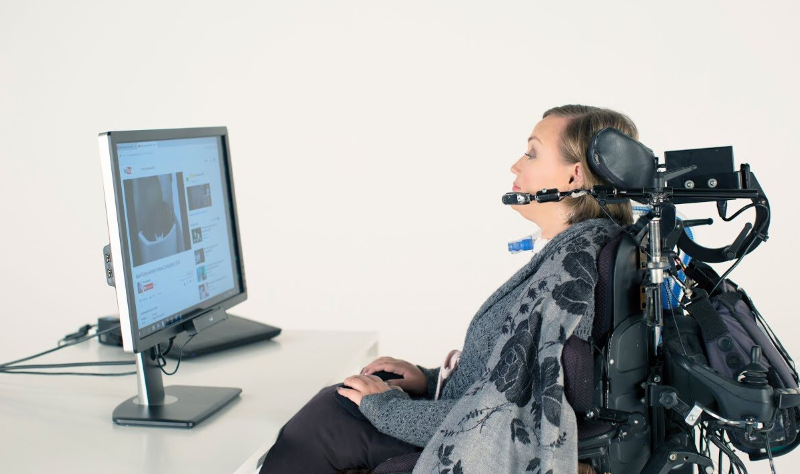
Screen readers are software apps that identify and interpret what is being displayed on a screen, allowing blind or visually impaired users to read the text with a speech synthesizer or braille display. A screen reader is the interface between a computer’s operating system, its applications, and the user. Screen readers are a form of assistive technology (AT) that is useful for addressing many types of special needs, including assistance for the blind or visually impaired, people who are illiterate, or those who have learning disabilities.
Screen Magnifiers
A screen magnifier is an app that interfaces with a computer’s graphical output to display enlarged screen content. Screen magnifiers are used by visually impaired people who have some functional vision, and can be particularly useful for the elderly. Screen magnifiers are not useful for those who have little or no vision.
Text-to-Speech Software
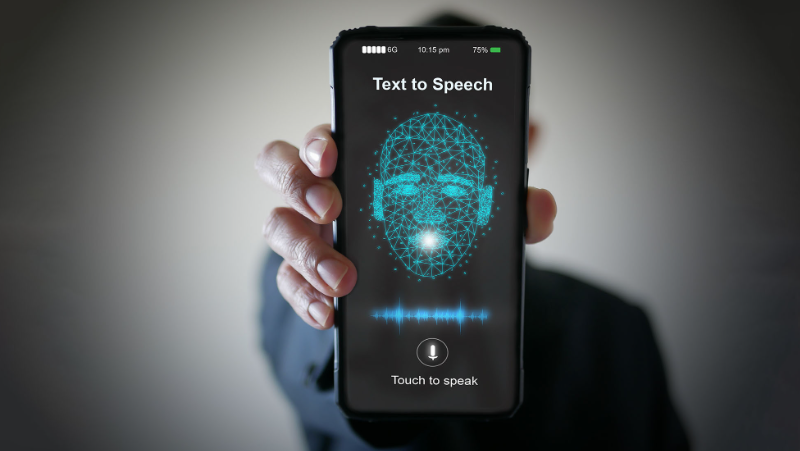
Text-to-speech software converts the written word into audio. TTS software is useful for the visually impaired as well as being a good teaching tool. The ability to hear accents and pronunciation is useful for learning languages.
TTY (Text Telephone)
TTY is also sometimes called a TDD, or Telecommunication Device for the Deaf, but TTY is the more commonly used term because TTYs are used by many people, not just hearing-impaired people. TTY is one of the oldest assistive technologies. In the 1960s and 1970s, deaf researchers in the United States developed relay services to enable deaf and hearing people to communicate with each other. These early devices were called teletypewriters, or TTY, and they connected to a phone system specifically created for the hearing-impaired**.**
Nowadays TTY conversion modems are connected between computers and telephones to allow an individual to type a message on a computer and send it to a TTY telephone. With TTY, someone who cannot hear can use the telephone by typing what they want to say and reading what the other party says. With TTY texts can also be sent via telephone. A person using a TTY can converse directly over the phone line with anyone else using a TTY or computer with the appropriate software.