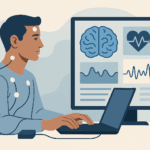
Big Data here, Big Data there… but what does it really mean? And to what extend should you, as a small practice or an independent physician, feel concerned about it?
Here is the second of a three posts-serie on THE (supposedly) hot topic. This week, we will have a look on the dark side of Big Data. So don’t forget your laser sword and may the Force be with us…
Big Data here, Big Data there… but what does it really mean? And to what extend should you, as a small practice or an independent physician, feel concerned about it?
Here is the second of a three posts-serie on THE (supposedly) hot topic. This week, we will have a look on the dark side of Big Data. So don’t forget your laser sword and may the Force be with us…
More Read

Is Big data really data?
Big data won’t harm healthcare (Sorry, the Dark Side won’t be that dark). But will it really do that much of a good, as it is prophesied?
Not everybody agrees on that.
Why? Because in “Big Data”, you have “Data”. As simple as that. Which means that to get an efficient “Big data” management, your raw material needs to be good.
And it seems that the process and the quality of the entered data remains quite an unsolved issue. First because hospital workers do not feel at ease with data entering. Then because who enters data, i.e., physicians and other clinicians, are usually doing it for reasons other than data analysis (namely for medical reasons, as a part of their practice). Other problem to be faced is the data isolation (within non-interconnected systems) and dispersion (among various of these non-interconnected systems). And we are not even talking about a nation- or earth-wide issue, as the interconnectivity problem is already critical enough within hospitals themselves. Let’s also mention that data entering requires time, and physicians are not always inclined to spend their precious hours in front of a computer, as they feel entering data doesn’t bring immediate / visible benefits for the physicians (they may even ask if it does bring any benefit at all). You have also the data structuration tension: physicians prefer unstructured data as a more flexible and narrative way of keeping track of their patients’ history, but what can a data analyst (or an automated analytical tool) do with unstructured data? Nothing, especially when you remember that these “tools […] are simply not powerful enough and sophisticated enough to handle […] complex data challenges”.
So, to answer the question in the subtitle: Big data can be real data, but only if the data it relies on can be efficiently used, which means data properly inserted. In order to do so, the processes, the actors and the tools to turn the concept into reality need to be significantly refined, trained and improved.
Add to all this the usual worries about information security and privacy, and you end up with the same problems and the same debates that rose, popped and are still rising and popping about EHR/EMR adoption, use and efficiency.
As Big data management finds one of its roots in information management, it is legitimate that the problems affecting the latter also affect the first. One can also think that, as the EMR/EHR debate is raging for quite a long time, solutions have been found and lessons have been learned from the past mistakes.
But have they?
Where are the physicians?
One of the main and recurrent critique addressed to the health information management system is their lack of usability. And one of the main and recurrent reason to explain it is the lack of involvement of health professionals in the conception of these tools. So a good way to learn this particular lesson from this particular past would have been to consider physicians as what they are: a central actor in the Big data process.
Just check the Rock Report: Big Data & Healthcare: among the “different healthcare stakeholders [that] have different goals and hopes for Big Data and analytics”, everybody is here… except the doctors.
Compare the volume of Big data literature from the industry and the academics point of view, with the information dedicated to the physicians. Try to find an article about how doctors can practically use Big data, in their daily practice (the ones written for obvious advertising purposes don’t really count). And when it comes down to small practices or independent physicians… well, in fact, it comes down so rarely to them that it is worthless notifying it.
The concept has been confiscated by health care service providers and (their) thinkers (because it was created by them?), and they are making the same mistake they made with the EHR/EMR (r)evolution: focus on the big stakeholders and forget that the market is not only composed of profitable entities.
By ignoring the doctors, the Big data management not only faces ethical (as the concern of medical data administration is more than creating value, it is first to improve the patients’ health and to ease health professionals work) and economical issues, it simply ceases to be relevant.
As it is based on sharing large amount of interconnected information, if one of its main sources is unable to provide good quality data or even any data at all, what’s the pertinence of the concept? Big data simply can’t be big if it is not shared and fed by every actor.
Conclusion
Nowadays, Big data management in healthcare is neither big, nor data. Would it be enough a disappointment to simply call it rubbish? That would be over-reacting. Especially because even if it smells like a marketing-crafted buzzword, it asks interesting questions about how small practices and independent physicians manage their information. Does Big data answers them? It doesn’t. At least in a direct way. But it gives clues and directions to explore. Which ones? Be patient, see you next week…
Photo credit: Dimensions Info