

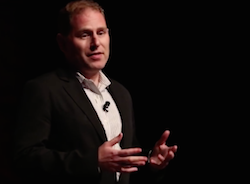
A Guest Post by Paul Rosen, MD
After reading Stewart Gandolf’s recent post, Patients Feel Healthcare Is Stuck in the Digital Dark Ages, I felt compelled to piggyback a few thoughts onto his astute observations.
A Guest Post by Paul Rosen, MD
After reading Stewart Gandolf’s recent post, Patients Feel Healthcare Is Stuck in the Digital Dark Ages, I felt compelled to piggyback a few thoughts onto his astute observations.
Stewart referenced the survey from Nielsen Strategic Health Perspectives, which demonstrates that healthcare is lacking in its ability to leverage technology to serve patients. It appears that across the board, online appointments, text messaging, video and photo sharing, and even convenient hours, are all mostly unavailable for patients.
Care of the patient hinges on optimal communication. Comparison of healthcare to other industries regarding adoption of technology that enhances communication reveals a Grand Canyon sized gap. The good news for health systems is that in order to close this communication gap, they do not need to invent anything new.
No need for new technology…
There’s no need for new hardware, software or devices. All of the tools necessary for effective patient communications already exist. The model for their use can be seen in other industries. And the next step is a leadership commitment to use modern communication tools: text messaging, live chat, e-mail, telehealth, and mobile health.
It will require the shift from an encounter-based approach to a convenience-based approach. We need to break out of the 9-5 offering into the 24/7 offering. The standard health system 24/7 offering, the emergency room, does not match what patients desire for off-hours, non-life threatening medical needs.
MedExpress, Walmart, Healthtap, and others are building market share based on the convenience economy. This is the competitive advantage they achieve by offering more convenience than the standard offering.
In 1999, Pine and Gilmore published The Experience Economy. The authors demonstrated how society has evolved from an agrarian economy to a manufacturing economy, to a service economy and then to an experience economy.
The best examples of companies understanding the consumer desire for memorable, appealing, and emotional WOW! experiences include Starbucks, Disney, and Ritz-Carlton. The experience economy is coming to healthcare in some respects courtesy of the pressure applied by the current CMS $850 million penalty of hospitals with low HCAHPS scores.
As this penalty for low performance in patient satisfaction is about to double in 2017, health systems are currently scrambling to improve their performance in patient satisfaction. While the efforts in patient satisfaction are needed, the next frontier in healthcare is convenience.
Those who can achieve in patient satisfaction (good communication, pain control, relief of suffering, showing empathy, compassion, and offering peace of mind) should think about pivoting their efforts to the convenience economy.
Consumers are currently demonstrating in health and non-health related industries that they will pay extra for elimination of hassles (loss of time, travel and money).
Critics within healthcare bemoan that calls for patient satisfaction, patient engagement and convenience are done at the diminishment of patient safety, quality and “good medicine.”
Providing in-the-moment services, communication and convenience is not a substitute for “good medicine,” but enhances the ability to provide quality medicine with value for the patient.
Health systems that learn the lessons from the convenience economy could become leaders in service delivery. The landscape is wide open. Patients are standing by and ready to hear from you on their tablets and mobile devices during the day, night and on weekends.
Author information
The post The Convenience Economy and Healthcare’s Grand Canyon Gap appeared first on Healthcare Success.




