First published on MedCityNews.com. Thanks to technology and the changing culture of medicine, those of us who don’t have thousands of dollars to donate to medical research have have easier ways to contribute.
First published on MedCityNews.com. Thanks to technology and the changing culture of medicine, those of us who don’t have thousands of dollars to donate to medical research have have easier ways to contribute.
Instead of money, we can donate our knowledge and our data. Crowdsourcing has tremendous potential in speeding up and broadening the scope of medical research, and the rise of community portals like CureTogether and PatientsLikeMe have shown that people are indeed willing to contribute their data if it means better outcomes or better understanding.
Lately I’ve come across a few fun crowdsourcing projects that are quick to participate in.
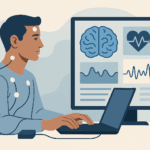
Data from 1 million people who complete a ten-minute memory and attention test could help scientists better understand human cognition and how it changes with age, at least in the eyes of Dr. Matt Huentelman. He’s a researcher at the Translational Genomics Research Institute in Arizona and launched the website MindCrowd this summer with The University of Arizona, the Alzheimer’s Prevention Initiative and the Alzheimer’s Association’s TrialMatch.
There are two phases to the project. The first is the ten-minute test that he hopes 1 million people will take. Once researchers look at those results, they’ll follow up with a subset of the participants to collect DNA saliva samples and an additional round of online testing.
So far just over 23,000 people have participated. I took the quiz and it was actually kind of fun. You can do it here.
Meanwhile, an initiative called Free the Data is trying to collect information that could help researchers better understand associations between gene mutations and cancer. This one’s a little more invasive; it asks individuals to share clinical and genetic information, specifically around BCRA1 and BCRA2 mutations, which are linked to an increased risk for breast and ovarian cancers.
Contributors can answer as many questions as they would like about themselves and their genetic profile and then control how and with whom their information is shared. Eventually the initiative plans to make the data publicly available on the NCBI ClinVar database, with the idea that a large pool of data could accelerate research and in the end improve the treatment of breast and ovarian cancer.
The project is being managed by the nonprofit health advocacy group Genetic Alliance and supported by UCSF, InVitae, Private Access, Syapse, and Captricity, the initiative plans to make collected data available.
Cancer researchers at Cancer Research UK are taking a different approach. They have built up a mass amount of archived images that need to be analyzed by the human eye. But its own researchers can’t get through them fast enough, so it’s enlisting the help of citizen scientists. “Don’t worry if you think you’ve made a mistake,” the instructions say. ““Each image will be classified multiple times by your fellow citizen scientists — you are not on your own!”
[Image credit: BigStockPhotos]