This post is part of our series, Digital Analytics 101 for Healthcare Marketers, where we provide short briefs on the What’s, Why’s, and How’s of digital strategy. In this article, we’ll explore how spam traffic can skew your website’s vital signs, making it difficult to chart your performance.
Whether it comes in the form of phone calls, emails, mailers, or questionable canned meat, pretty much everybody can agree that spam is no good. Unfortunately, these unwelcomed solicitations have started showing up in yet another place: your website traffic data.

If you use Google Analytics, chances are you’ve already seen this problem crop up. At first glance it may seem innocuous: spammers and their spam-bot henchman are linking to websites like yours and, seemingly, people are clicking those links, sending those sites referral traffic and generating pageviews. Congrats on the extra traffic, right?
Not so fast — turns out that traffic is completely fake. Bots either crawl your site to mimic user engagement and click-throughs, or use “ghosts” to bypass your servers entirely, injecting fake pageviews and referrals directly into your analytics report.
Why Should You Care?
Beyond being annoying, spammers create several real problems for medical marketers trying to bolster their online presence. While the goal of most spammers is to direct you, the website owner, to either their own site or that of their client, some are actually malicious and auto-download malware onto your computer as soon as you reach the target site. Even more dangerously, bots may be searching for vulnerabilities in your Content Management System (CMS) — e.g., WordPress or HubSpot — or in your third-party website plugins.
Second, referral traffic can seriously interfere with your analytics data. If a significant portion of your web traffic is fake, it both inflates your traffic numbers and decreases your website’s overall performance — the bounce rate of spammers (the percentage of users who leave immediately) is 100%, and their time spent on page is close to zero.
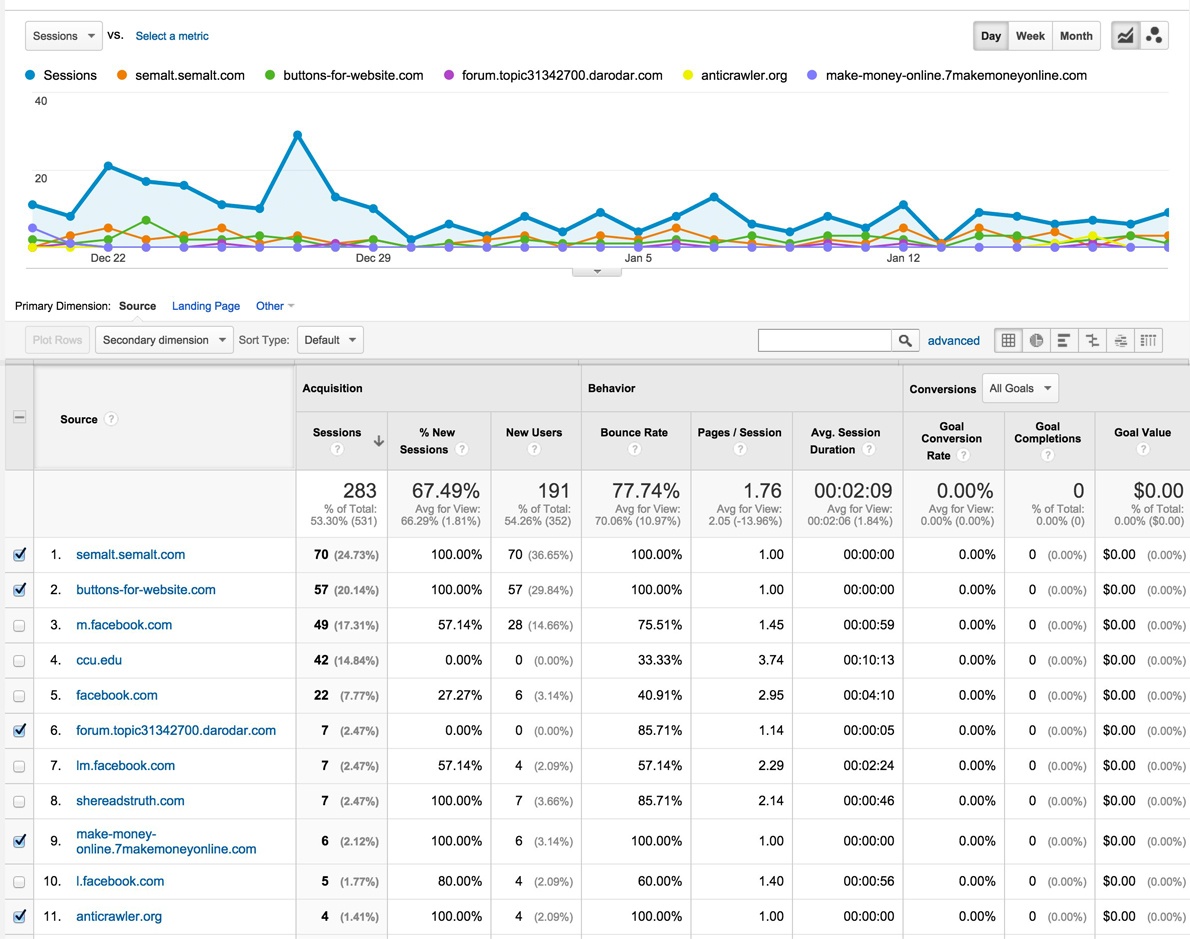
(Example Referral Report from Megalytic — checked boxes represent spam traffic sources)
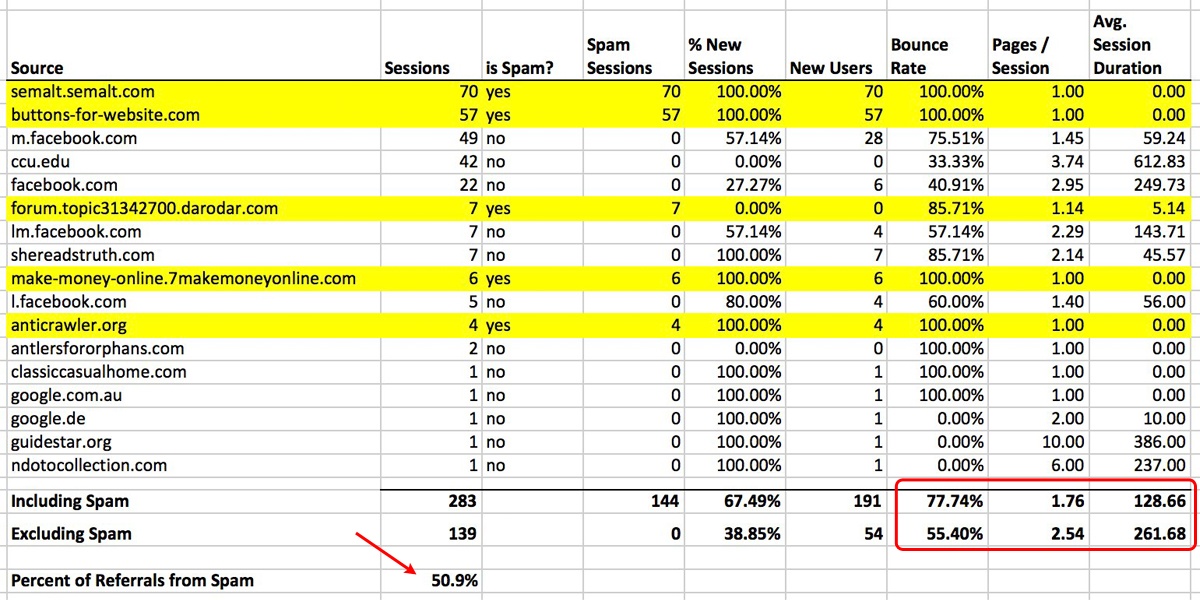
For a large website with tens of thousands of daily visitors, that’s not necessarily a major problem — but for the majority of hospitals, physicians, and medical device companies with smaller sites, it can skew important marketing data and actually harm the business. Moreover, website-crawling bots can slow down your site’s response times and overall load speed, damaging the experience of actual users. And worst of all, they’re everywhere — Megalytic, for example, found that over 50% of its traffic on Google Analytics was from spam bots.
What Can Medical Marketers Do?

In an attempt to clamp down on “ghost traffic,” Google Analytics recently rolled out a Valid Hostname filter that seems to be working, or at least slowing bots down. But spammers, being spammers, are pretty resourceful, and many are already shifting to valid hostnames to get around Google’s roadblocks.
Other solutions involve adjusting your Google Analytics filters so that only “valid” traffic sources appear on your servers. We’ll spare you the gritty details if you’re not intimately familiar with the platform, but it essentially involves creating a list of valid hostnames that should be showing up in your reports — the key is that ghost referrals typically originate from hostnames that are not yours, and you can use that fact to filter them out of your reports. Moz also recommends filtering out traffic from select countries where you know spammers to be prevalent (unless you expect business from those places).
It’s important to recognize that these solutions are actually quite complicated, and mistakes can have a seriously negative impact on your marketing efforts. Moreover, the spamming game is a constantly evolving one, and medical marketers must utilize every tool at their disposal if they want to stay ahead. For this reason, education is often your best defense — familiarize yourself with the nuances of Google Analytics, as well as your target audience and typical traffic patterns, and you’ll soon become an expert in weeding out the bad.

(Image credits: Megalytic, Geralt/Pixabay)