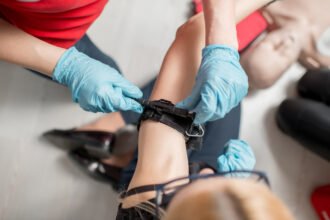
The standard definition for vital signs is, “measures of various physiological statistics, often taken by health professionals, in order to assess the most basic body functions”. Another definition says vital signs are literally “signs of life”. Classic vital signs include heart rate (pulse), respiratory rate, blood pressure and body temperature. The absence of, or significant changes to, your vital signs signify that something is drastically wrong, and likely life-threatening.
The standard definition for vital signs is, “measures of various physiological statistics, often taken by health professionals, in order to assess the most basic body functions”. Another definition says vital signs are literally “signs of life”. Classic vital signs include heart rate (pulse), respiratory rate, blood pressure and body temperature. The absence of, or significant changes to, your vital signs signify that something is drastically wrong, and likely life-threatening. In a hospital or clinic settings, physicians may monitor other physiologic signs such as changes in blood chemistry, blood volume, blood gas levels, and urinary output. Some of these things are also powerful indicators of health status. However, this week a panel of experts at the Robert Wood Johnson Foundation (RWJF) is warning that perhaps there are other, equally important vital signs for a person’s health that clinicians need to know.
 In a report published by RWJF’s Commission to Build A Healthier America, experts say that although the Accountable Care Act and giving more Americans health insurance coverage are important, this won’t make most Americans healthier. Instead, policies outside of health care coverage, and systems reforms, are needed. The Commission report lays out details and why this will make a difference for kids now, and later as adults.
To give but one example, the Commission recommends creating new Vital Signs for Health. One of those is a poverty screening tool for primary care clinicians that encourages them to also screen for food (nutrition), heat, and other basic resources that people need to stay healthy. Healthcare providers are encouraged to think about poverty as a major health risk equivalent to other chronic diseases such as hypertension, high cholesterol, and smoking. Researchers say health professionals could then help connect patients with the resources they need. This they say, would also be a way to foster greater collaboration between health professionals and other sectors in the community to form a bridge between healthcare and other factors that affect a person’s health.
 One could certainly argue that with everything else on their plates, primary care physicians may be reluctant to take this on, especially if there isn’t a clear connection between gathering the information and then being able to do something about it by referring patients to appropriate community resources. There’s nothing less satisfying for physicians and nurses than uncovering a bunch of problems over which they have little influence or ability to fix. Nonetheless, I buy into the fact that there are plenty of socio-economic, environmental, and behavioral factors that are perhaps better indicators of health status and future outcomes than a lot of the information we typically gather from a physical exam and blood tests.
At Microsoft, we are very much aware that there is far more to health than what goes on in clinics and hospitals. In fact, a major thrust of our work is aimed directly at where people live and work, in cities, and the tools and technologies that cities need to improve the health and well being of their citizens. We call this worldwide initiative CityNext, and while the focus includes much more than health (education, transportation, public safety, etc.), we also understand that without health not much else really matters.
I think the good folks at RWJF are on to something here. Certainly, we need to broaden our definition of what good health really means and how we get populations healthier. If that equates to having physicians and nurses ask a few more questions during patient encounters, I’d vote yes. Indeed, there are other “vital signs” we physicians should be monitoring. But I would then ask community, business and government leaders, educators, social service agencies, and citizens everywhere to help provide the tools, technologies, solutions and resources that will be needed to “cure the patient” once we clinicians uncover the sources of their illness.