
This was the second Seattle health meetup we attended in March; the previous was the Health Innovators Meetup.
This was the second Seattle health meetup we attended in March; the previous was the Health Innovators Meetup. Health 2.0 is a global organization (we demoed at a Health 2.0 event in London back in November 2013) but the Seattle group is quite new. They are valiantly trying to help build a community of healthcare industry and startups, and those just interested in healthtech issues in Seattle.
The meetup was hosted and moderated by Tory Kelso of GenieMD, and formerly Microsoft HealthVault and Cerner, and panelists were:
• Anand Gaddum, Director, Health & Life Sciences at iLink Systems.
• Howard Mahran, CEO & Founder Deep Domain, Inc
• Sailesh Chutan, CEO and co-Founder at Mobisante, Inc.
Each talked about the drivers for their participation in healthcare. For Howard Mahran, like many entrepreneurs we’ve met, ourselves included, it was frustration born from a personal experience. When Howard’s father was diagnosed with prostate cancer, he was amazed at the lack of information and data available about the diagnosis and prognosis. Sailesh Chutan was driven by a passion for accessibility to technology on a global basis. Anand Gadddum cited the opportunity for applying resources to the wealth of health data out there to make a difference.
When asked how to pinpoint the right problem to solve in healthcare, panelists discussed how to find the pain point by looking at something that doesn’t work today, and how to spot the disruption by seeing how a market or technology change could become amplified when applied to another industry. Sailesh used the example that the computing power in a smartphone today is more than enough to do complex image processing, and recalled his ‘aha’ moment when he realized to reduce cost and improve access, move access to services closest to the patient and find the lowest cost person to deliver the care. (We’ve written about this before. It’s often called “operating at the top of your license”, that is, making sure that if a lower licensed person can perform a task, enabling them to do it.)
Howard talked about the pain of trying to make sense of the “dumptruck” of data that the over 1100 non-standardized EMRs produce, an acute pain for smaller hospitals and clinics that do not have a large IT staff. Also related to the proliferation of non-standard EMRs, Anand talked about customers that are stuck with old technology that is siloed and not easily integrated. Services companies like iLink can help integrate and unlock this information.
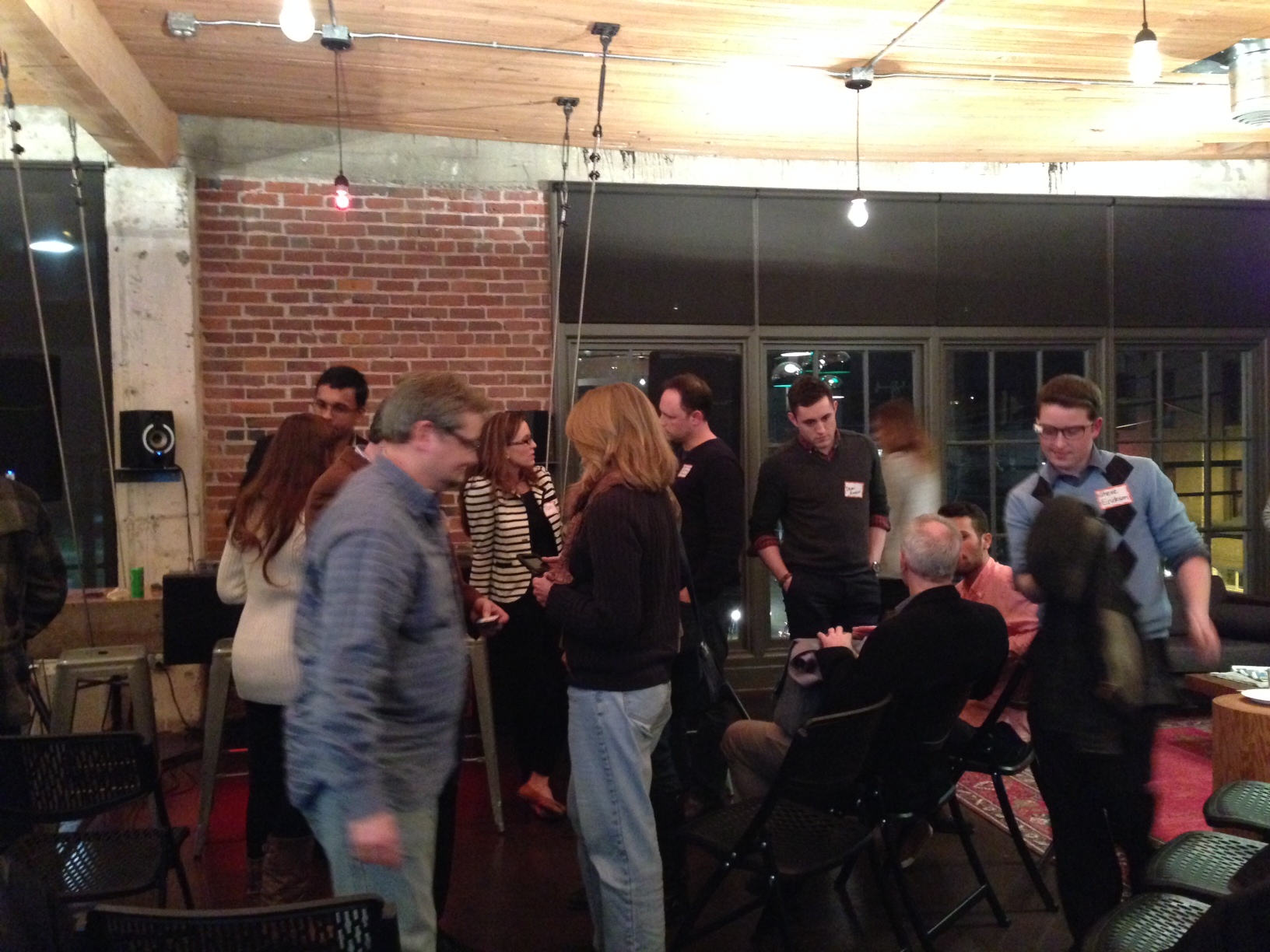
Networking at Health 2.0 Seattle
At this point Tory pointed out that all three solutions had started with the technology, as technologists often do, and asked how to translate a technical solution to a customer focus. Howard readily agreed with the need to translate, saying that his customers don’t care about the technology at all, they care about the problem they have which is not being able to get information. He talked about how Deep Domain had completely changed their sales process to focus on customer pain rather than how great their technology is, and shared the enviable example of a sale that closed in 4 days after they took this approach.
Sailesh also talked about how they had adapted their sales strategy and focus based on what they’d learned in the field. In particular, they found that their mobile-phone based ultrasound offered new billing opportunities to small and particularly rural communities. Rather than providing a referral to a hospital for an ultrasound these clinics could perform ultrasounds themselves for a fraction of the cost resulting in a new revenue stream for the clinic and much higher convenience for the patient. He also realized in selling to these smaller customers, Mobisante had to provide a complete solution including training and image management.
The next topic was on healthcare’s slow embrace of platform, and perhaps the best quote of the night that the current crop of EMRs are why healthcare doesn’t understand platform. Certainly the lack of openness and data interoperability as well as the late adoption of many now standard enterprise IT practices pointed out by Anand are the key reasons behind this.
Some other reasons that healthcare has been slow to embrace platform and cloud technology is the very real fines for HIPAA breaches, although the panel pointed out that most breaches are not due to technology vendors but human error like losing laptops that have PHI on them.
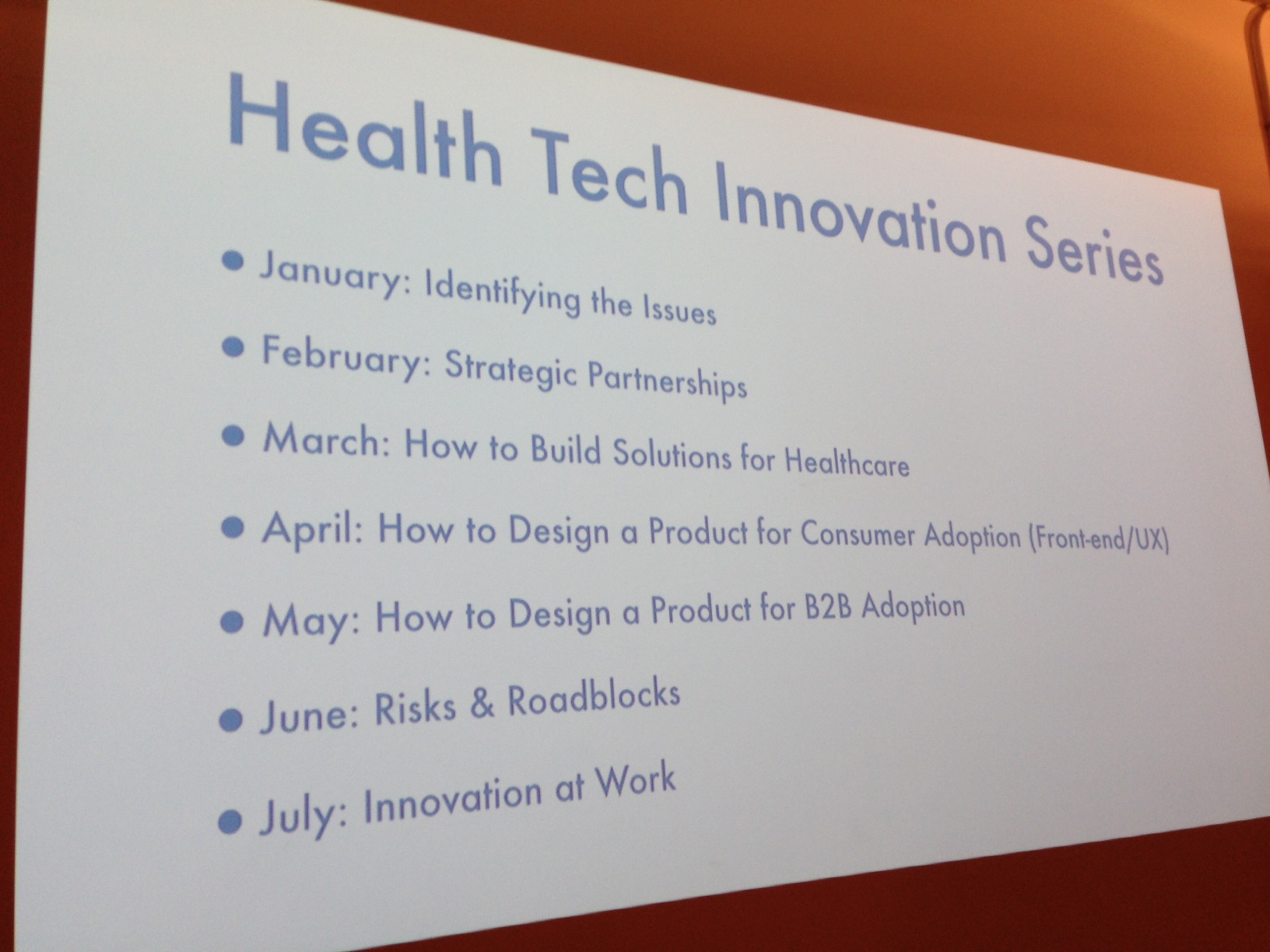
Upcoming Health 2.0 Seattle Events
To conclude the session, Tory asked for some tips for anyone wanting to get into healthcare technology. Howard jokingly responded “don’t” but the underlying truth is that with long sales cycles, lack of standardization, and many regulations, health technology is not for the faint of heart. He also recommended to “look down not up”, that is don’t ignore the smaller hospitals that can implement more quickly or where your solution offers value they might not normally afford, like Deep Domain’s reporting or Mobisante’s ultrasound. Would-be entrepreneurs were also advised to seek out the early adopters in customers, those people who have passion, understand your value proposition, and are mission driven. These people will help you succeed.