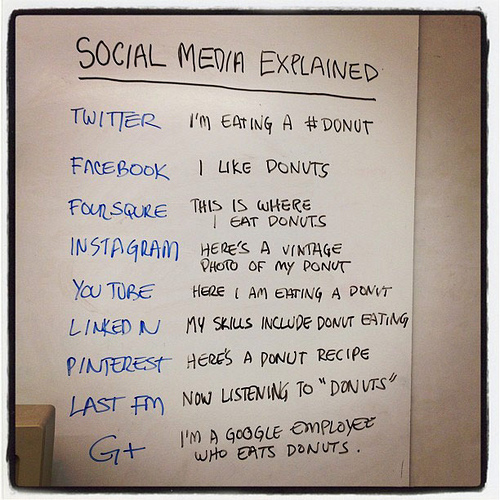
It’s pretty darn cold outside. Therefore, not a bad opportunity to stay inside and write about social media.
A number of our posts this time around focus on doctor ratings sites:
It’s pretty darn cold outside. Therefore, not a bad opportunity to stay inside and write about social media.
A number of our posts this time around focus on doctor ratings sites:
MD Whistleblower is emblematic of doctors who trash physician ratings sites without actually bothering to read what’s on them, in this case offering a number of hypothetical (i.e., fictional) comments as evidence that the sites are no good. Most people wouldn’t criticize a movie without seeing it or write a review of a car without driving it, but somehow many docs know –somehow– that doctor rating sites are no good.
Doctors aren’t the only ones to think bad thoughts about ratings sites. Some patient advocates feel the same way. In this post my Health Business Blog starts a quarrel with one such advocate, who is surprisingly dismissive of social media and surprisingly confident in public records to ferret out the peachy keen docs from the bad apples.
Online patient review sites are already prominent, yet their potential is far from fully realized. Healthcare Success Strategies reports on a Software Advice study on how patients are using online reviews. Only one in four patients is currently using online reviews to research doctors. The demographics skew younger –no surprise there. And the power of insurance rules is strong enough to keep most people in-network even when they find a stellar review of someone on the outside.
And now for something somewhat different.
Nicola Ziaday shares survey data on how health care professionals use social media. Most use it just like everyone else: for personal purposes. But more and more are bringing social media into their professional lives, e.g., for job searches and professional networking. I’d like to see health care professionals use social media more –and more effectively– to communicate their wisdom and experience to consumers and to engage in online communities that include doctors and patients.
Christina’s Considerations shares a doozy. A patient who sued a doctor for taking pictures of her (drunk self) in the emergency room and posting them on Facebook and Instagram. A security guard told the doctor (a fellow) to delete the photos, which were of an acquaintance. But did he listen? No. Instead he even included some uncharitable captions.
HealthBlawg delves into some of the finer points of doctor/patient interaction in social media. For example, a patient was taken off a liver transplant list when the transplant team located social media posts of the patient with alcohol. “As important as knowing how, when and where to post something is knowing where to look for information, when and where not to look, and when to take it off line.”
The cHealth Blog offers part IV in its series on making health addictive. People check their smartphones up to 150 times a day. So why not take advantage of that behavior to hit users with “personalized, relevant, motivational, unobtrusive” messages to “induce permanent behavior change?” Why not indeed?
And on that note, we’re done. Until my esteemed blogger colleagues from Colorado Health Insurance Insider take the wheel for Edition #45, that is.
photo credit: Photo Giddy via photopin cc