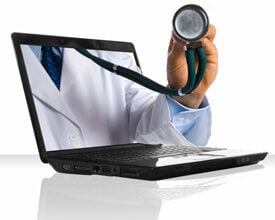
While some traditionalists in the healthcare industry worry that mobile health and other new technologies hinder the development of personal relationships between providers and patients, the benefits of these advanced solutions far outweigh the attached stigma.
While some traditionalists in the healthcare industry worry that mobile health and other new technologies hinder the development of personal relationships between providers and patients, the benefits of these advanced solutions far outweigh the attached stigma.
Mobile health technology gives caregivers and physicians real-time access to patients and data, allowing for strengthened provider-patient relationships. As the research shows, 96 percent of patients appreciate the benefits of mobile health apps, while 72 percent of providers believe these apps encourage patients to take ownership of their healthcare decisions.
Office visits will always have their place in healthcare, of course. No matter how far technology advances, until an app can make a foolproof diagnosis or perform surgery at home, people will continue to rely on human clinicians for their medical needs.
However, mobile health technology increases efficiency, freeing time from everyone’s busy schedules and cutting down on lengthy waits at the doctor’s office.
The continued expansion of the Internet of Things promises cohesive solutions that will not only augment healthcare providers’ current abilities but will also allow them to provide an unprecedented level of care for patients. When monitoring devices, self-help apps, and even smart pill bottles work together, great things can happen in patient care.
The Marriage of Technology and Care
Imagine a world where a small implant can measure a diabetic’s blood metrics and adjust his insulin supply to compensate. Or where a smartwatch can alert a man in his 50s about an impending heart attack. As new technologies develop, the possibilities for care improvement are nearly endless.
What if a future device could do more than monitor and alert, but actually save a life before the paramedics arrive? If a mobile heart monitor can exist, then why not one that can act as an emergency defibrillator?
Sci-fi though they might sound, solutions like these are not far off, with many already under development.
Implants in the future will be able to offer real-time data delivery, increasing the time frame to catch and stop life-threatening illnesses in the early — and more likely to be treatable — stages. “An ounce of prevention is worth a pound of cure” could become seamless and intuitive if our technology alerted us when prompt preventive measures became necessary.
Mobile apps on tablets and smartphones provide video chat and remote diagnoses to people who cannot go to a hospital right away or do not need immediate emergency care, freeing up waiting rooms and allowing for more deliberate examination. This is not technology in the far-off future; it’s happening right now, all around the world. As these tools improve, their use will only become more widespread.
Questions for Tomorrow
The benefits are undeniable, but as the scope of our abilities increases, so do the dangers that accompany them. As technology and healthcare continue to grow together, security must become our highest priority if we wish to maintain patient-provider trust.
How will we deliver the data? What encryption method will we use? Who has access to the data, and in what capacity can they share the information? Where and how long do we store the data?
For IoT solutions to continue to grow, providers and vendors must prioritize the security of patient data. Industry standards have to evolve fluidly to keep up with the rapid advances in technology. Audits should be frequent and thorough to ensure compliance.
Despite the challenges ahead, the potential benefits of the growing relationship between the IoT and healthcare are tremendous. This relationship must continue to grow to ensure patients receive the best care and providers have the best tools to provide it. The quicker patients and providers embrace the future of healthcare, the sooner it will arrive.