 I have been thinking a lot about this concept of addictive health lately. I really believe it has legs. In my last post and in a recent talk, I remarked how addicted people are to their smartphones (checking t
I have been thinking a lot about this concept of addictive health lately. I really believe it has legs. In my last post and in a recent talk, I remarked how addicted people are to their smartphones (checking them 150 times/day). I then compared that to data showing that the mere additional act of pushing one button negatively predicted engagement with our connected health program to improve blood pressure control. We practically salivate to check our phones but ask someone to push one button to improve their chronic condition and it’s too much to ask. This is a weakness in how the health care delivery system views chronic illness management. Clearly we could make mobile health addictive (if mobile phones are addictive), but we have not thought of it in this way.
Is there a way we could unobtrusively and almost subliminally slip in a health-related message while you’re checking your beloved smartphone screen? The advertising industry is onto something similar. The most basic example is pop up ads that appear in your web browser, especially those that are targeted to your previous browsing behavior. A more sophisticated version is Facebook Home, which can be downloaded to some types of Android smartphones and, when installed, presents updated Facebook information on the phone’s home screen before you get to whatever it was you wanted to check. There is also the example of product placement on your favorite TV show (I always chuckled when I saw the government agents on 24 using Apple computers).
We have a lot to learn from the advertising industry when it comes to health messaging. There are numerous other examples of working product-related messaging into your life in ways that you don’t find too obtrusive. Figuring this out for health will be more challenging. Here are a couple of differences I thought of, and I’m sure there are others.

Healthy behaviors are not as easy to manipulate as purchasing behaviors. So, we will have to substantially re-organize the health care economy in order to support these types of motivational tactics to improve health.
For now, let’s assume we can get there and that your smartphone screen will be the focal point of this new health delivery model. In my last post, I mentioned three strategies (Make it About Life, Make it Personal and Reinforce Social Connections) and three tactics (Employ Subliminal Messaging, Use Unpredictable Rewards and Use the Sentinel Effect).
In this and several upcoming posts, I plan to more fully examine both the idea of making health addictive and these strategies/tactics. First up…
Make it About Life
I saw a talk recently by Dr. Michael Roizin and he described this phenomenon as ‘fun and edgy.’ Our health care culture, particularly in training doctors, is still centered on the notion of acute care delivery. If you are acutely ill and need something fixed, we can probably get to the point and fix it without a lot of verbal fanfare. When we transition to an environment of chronic illness management and prevention, this logic falls flat. The conditions (hypertension, diabetes, metabolic syndrome) are all silent and the pay off of treating them is abstract (avoid heart attack or stroke down the line or a year or two of additional life span). In that context, messaging like, “You are 10 pounds too heavy. You should lose some weight,” is not very effective.
The trick seems to be making the message and the payoff less clinical, less technical, less abstract and more focused on some aspirational goal that you have (“I want to be less winded when I walk around on vacation.” Or, “I want to enjoy my grandchildren.”).
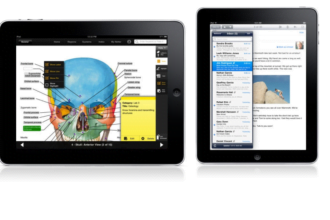
Effectively implementing this strategy will require a couple of important changes. One is to change medical school curricula and teach students early on about patients’ mindset about treating an acute illness versus chronic disease management and how to implement effective behavior change programs. The second will be to learn as much as we can about each individual in order to know what their personal, relevant aspirational goals are. This is another place where the smartphone comes into the picture. It will become both a data rich environment and a data conduit to enable analytic systems to learn enough about you to help make those behavior change messages relevant.
Don’t make it about sickness; don’t make it about health, even, but make it about life.
What do you think?
(mhealth / shutterstock)