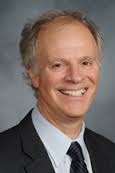
Larry Casalino, MD, PhD, a well-known health services researcher at Weill Cornell Medical College, has written a Perspective for the November 7, 2013 issue of the New England Journal of Medicine (Professionalism and Caring for Medicaid Patients – The 5% Commitment?”). This commentary is sure to make some docs mad. But I thought he wrote it in a “fair and balanced way.”
Larry Casalino, MD, PhD, a well-known health services researcher at Weill Cornell Medical College, has written a Perspective for the November 7, 2013 issue of the New England Journal of Medicine (Professionalism and Caring for Medicaid Patients – The 5% Commitment?”). This commentary is sure to make some docs mad. But I thought he wrote it in a “fair and balanced way.”
He points out that more than one fifth of the US population is insured via Medicaid – a number that will expand greatly when the ACA is fully implemented. But 30% of office-based physicians do not accept new Medicaid patients. In fact, he points out that the higher paid specialities and physicians in higher-income areas are even less likely to accept Medicaid patients.
Yes, it is true that Medicaid reimbursement rates are dismally low. Larry points out that his practice lost money on most MediCal (California’s version of Medicaid) patients. And these patients were complicated and often required more time than non-Medicaid patients because of behavioral health problems and transportation and social services needs.
But many of the physicians that refuse to accept Medicaid are handsomely reimbursed:
- According to the Medscape Compensation Report, the mean income of Orthopedic Surgeons in 2012 was >$400,000, but 40% of orthopedic practices do not accept new Medicaid patients
- Dermtaologists mean income was >$300,000 yet 45% of them do not accept new Medicaid patients
- Despite a high prevalence of mental health disorders amongst Medicaid recipients, 56% of psychiatrists do not accept them – their mean income by the way is only $186,000
Larry Casalino, MD, PhD, Weill Cornell Medical College
Larry makes the argument that medical professionalism – a commitment to putting patients’ interests first – should lead to a consideration of caring for a “reasonable number” of Medicaid patients – he suggests 5%. That, he says, translates into office based physicians seeing approximately one Medicaid patient per day. For surgeons, it means operating on one Medicaid patient every 1-2 weeks.
He points out that spreading the care of Medicaid patients across a larger number of physicians would be a “service to a physician’s colleagues as well as to patients.” ERs could decompress and referrals to specialists would be easier to arrange.
I know there are legitimate and, in some cases, compelling counter arguments. Some docs have huge medical school loans to pay off, others are in relatively low-paying specialities. But the question remains. What should be the commitment of medical professionals, relatively privileged in our society compared to others, to ensure that the most vulnerable amongst us has access to timely care in reasonable settings (e.g., office vs ER)? It is a question we had better grapple with as millions more people become insured via the Medicaid program.
Leave me your comments, suggestions. How can we carry on this conversation?