The Open Notes initiative has created a flurry of interest in the on-line medical community but not even a blip that I can tell in my personal world. Patients appear oblivious. The story was not covered by our local newspaper. No physicians are nervously or otherwise discussing it in our doctor’s lounge.
The Open Notes initiative has created a flurry of interest in the on-line medical community but not even a blip that I can tell in my personal world. Patients appear oblivious. The story was not covered by our local newspaper. No physicians are nervously or otherwise discussing it in our doctor’s lounge.
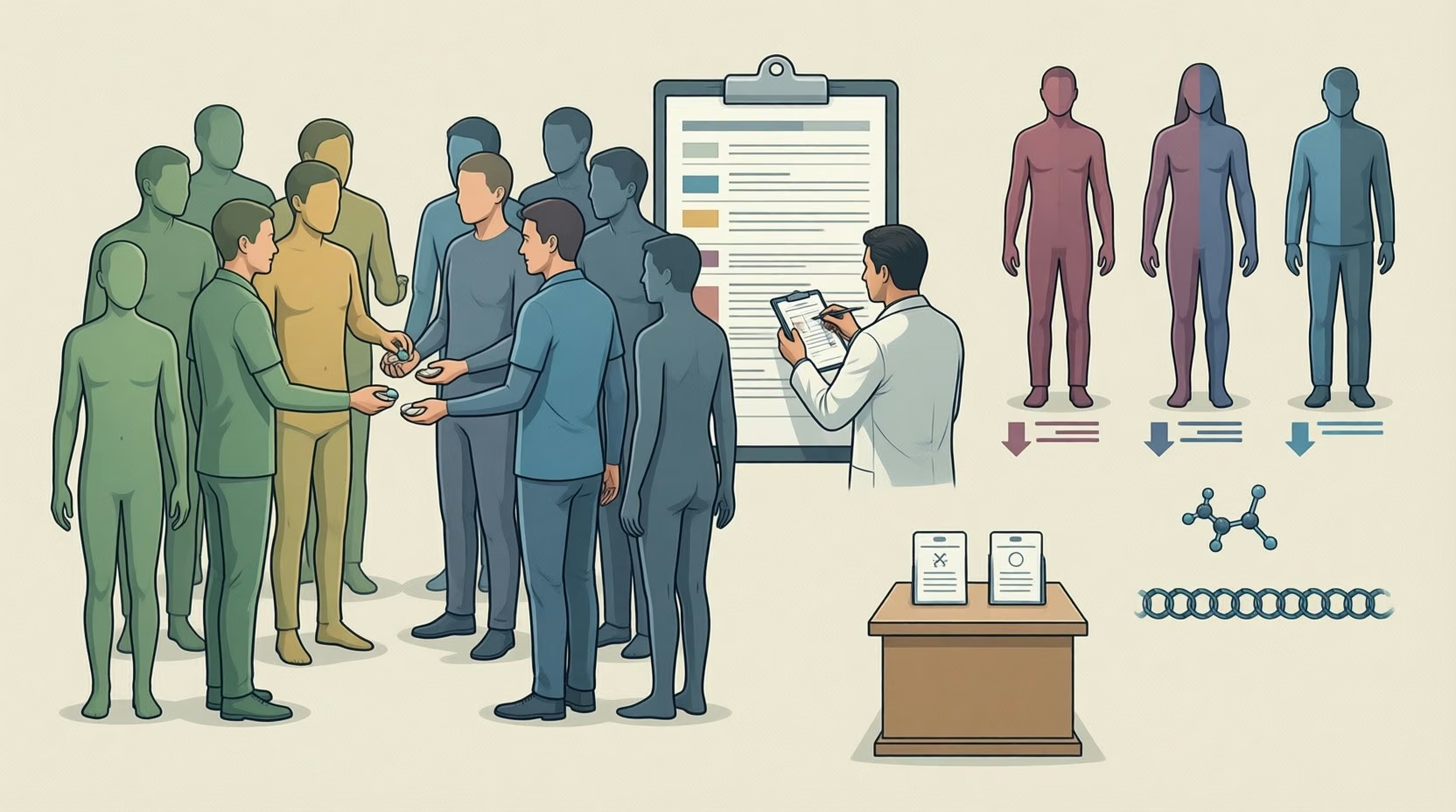
Despite Meaningful Use criteria breathing down our organizations’s neck, which includes patient portals with the capability to obtain their records electronically, no one is talking about this important study: three healthcare systems, Beth Israel Deaconess Medical Center in Boston, Geisinger Health System in Pennsylvania, and Harborview Medical Center in Seattle participated. This included 105 doctors and more than 13,000 patients. When the study was finished 99% of patients surveyed wanted continued access to their notes and NO DOCTORS opted out.
The last phrase is the most important one to me as a physician. In my world doctors are often very nervous at the thought of patients obtaining access to their own records even though technically the patient owns the record. Yet the more I see of charting, especially electronic charting, the more important it is that patients have the ability to access and help us improve their records.
As an example, I recently had a new patient who related being involved in a motor vehicle accident many years ago. He’d had surgery shortly after but he wasn’t sure whether or not he’d had his spleen removed, though he knew it had ruptured. This is important because individuals who have no spleen are at increased risk of certain kinds of infections and need routine and regular followup vaccinations to protect them. The first thing I did was access records from an abdominal hernia surgery he’d had just a few years ago, to repair a hernia he had as a result of the first surgery. The operating doctor dictated in his note that the patient had had a splenectomy. I wasn’t convinced so I dug a little further and fortunately the hospital still had records of the first surgery (by law the hospital does not have to keep records from over twenty years ago). The patient did not have his spleen removed and thus needs neither recurrent vaccinations or expensive imaging to figure out the answer. But what if I’d just taken the mistaken word of the second surgeon? How much better if the patient had been given easy access to his records years ago when he’d first wondered?
Soon, patients will have access to their own charts and will be capable of giving much better histories or better yet, will have their medical stories in their own Personal Health Records. This can save a lot in time and unnecessary tests, not to mention improved accuracy in patient records. Because after all, who has more at stake in the accuracy of the record than the patient? Or as e-Patient Dave deBronkart says: