 June’s Seattle Health Innovator’s Meetup topic was on Innovations in Population Health Management. Interestingly much of the discussion from panelists circled back to the individual patient.
June’s Seattle Health Innovator’s Meetup topic was on Innovations in Population Health Management. Interestingly much of the discussion from panelists circled back to the individual patient. It seems that much of this was because the great promise of big data analytics in healthcare and automation and economies of scale through electronic medical records have not been realized. The audience consisted of entrepreneurs building solutions in this area, and innovative and entrepreneurial people within health systems.
The event, at the sleek new Cambia Grove healthcare meeting space, was kicked off by Dr. Wellesley Chapman, Medical Director Innovation and Development at Group Health. Dr Chapman set the stage by defining population health in a highly inspirational manner by referring to The Gates Foundation mission that everyone deserves to live a healthy and productive life. Narrowing in a bit more Dr. Chapman talked about the influences of good health on a population. Interestingly, although population health is largely thought of as a health system problem, the formal medical system only has a 20% influence on the health of a population and a person. Socio-economic factors have a much bigger influence, things like building walkable cities that encourage activity and community, access to healthful foods, and education. Unfortunately with healthcare representing 18% of the US GDP, there is a misallocation of funds to the clean up of problems versus infrastructure that will affect the well-being of the whole population. However, even though care delivery is a small part of the overall picture and influencers of health, Dr. Chapman enthusiastically encouraged the audience to do what they could to affect change.
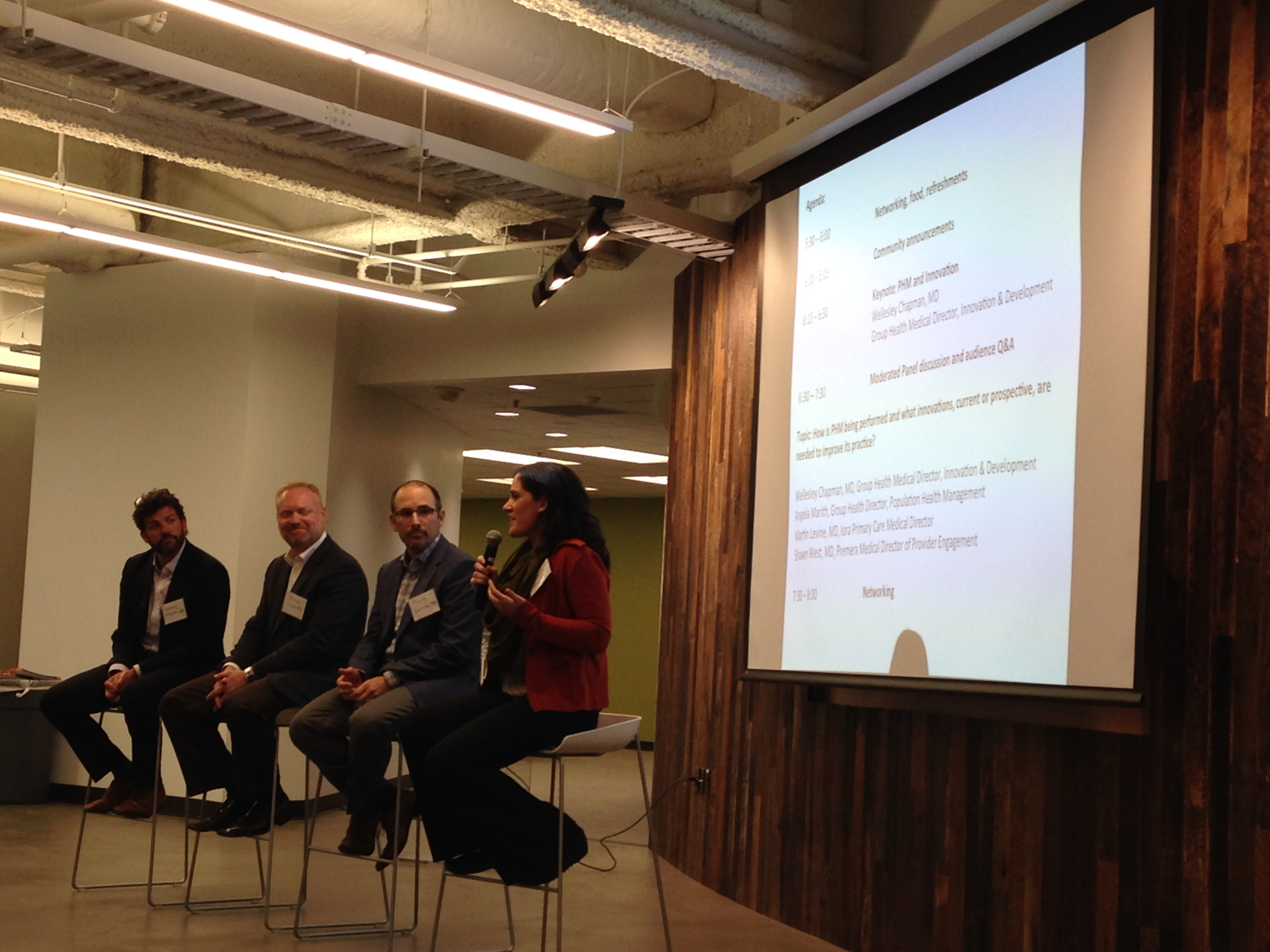
The meet up continued with a panel discussion moderated by former Group Health VP of Marketing and now patient engagement consultant, Randy Wise and featuring:
More Read

- Wellesley Chapman, MD, Group Health Medical Director, Innovation & Development
- Angela Marith, Group Health Director, Population Health Management
- Martin Levine, MD, Iora Primary Care Medical Director
- Shawn West, MD, Premera Medical Director of Provider Engagement
When considering a population health strategy, key factors the panel felt were important were lead time to implement, expected outcomes, costs to patient and payer, and the overall patient experience. Patients are concerned about the quality of their lives, and this needs to be addressed at the primary care level, however, most health systems do not have a primary care strategy. Primary care is reactive rather than preventative, and reactive care is not usually focused on patient goals. Since the health of a population is so varied, at the primary care level, panelist thought “everything could be considered population health” making it difficult to pinpoint specific solutions for care.
When asked about whether big data was improving population health, panelists were negative to neutral, citing Excel spreadsheets used to review data, and the opportunity to know a lot more about patients. However this again came back to the specific saying that the intervention is all about the relationship between patient and provider and asking whether we are enabling patients to follow through with recommendations. (At Wellpepper, we would say there’s a great opportunity to improve here based on many of the care plans and instructions we’ve seen.)
 Dr. Levine from Iora talked about his experiences training residents in listening skills and the payoff. Compared to a common approach of telling the patient they have limited time and to focus on the top issue, Dr. Levine advocated listening first, ask the patient to recount all their concerns, make a commitment to truly listen and hold the information the patient provided, and then follow up on the most pressing issues. Although the residents were skeptical, this approach yielded significantly faster follow-up as key information wasn’t being uncovered at a later date.
Events like this provide a great opportunity for those enthusiastic about changing healthcare to exchange ideas, and especially for entrepreneurs to learn practical advice from those in the trenches delivering care and trying new models. The big takeaways are that the promise of big data in healthcare is yet to be realized, and because of that population health tools may not be as effective as they could be. While the focus on patient personalization, customization, and meeting the needs of the individual are key, we need to figure out new ways to scale to solve this great problems in health.