

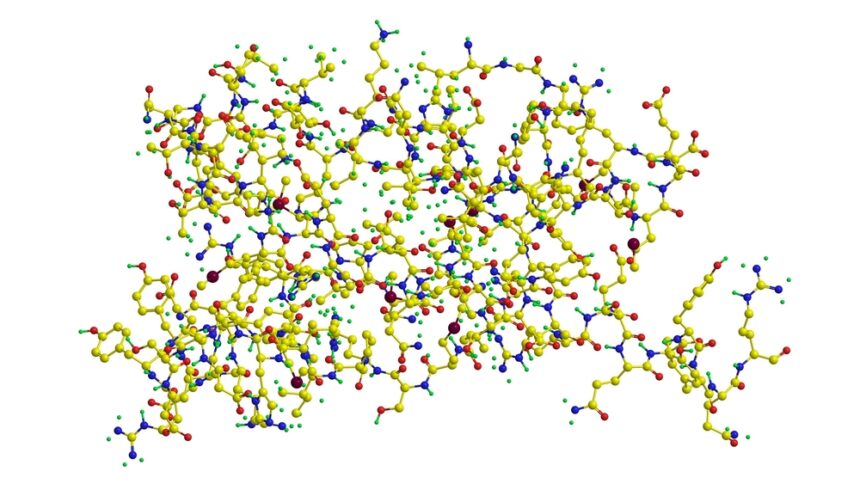
Prions are infectious proteins that were first discovered in the early 80s. At that time, it was difficult to predict the potential significance of the discovery. New technologies have allowed us to better understand the full complexity of the ways that these molecules behave and how they are involved in the causes of many diseases.
More Than a Simple Protein
Prions are made of amino acids. Amino acids are the components of long chains that build the Prion protein (PrP); a polymer that can be found throughout the body in both people and animals. If these proteins acquire a misfolded infectious state and become resistant to proteases, these complex enzymes become responsible for the normal breakdown of proteins (1). An infectious prion protein is called PrPsc and can be transmitted from one organism to another. The manner in which this epidemically happens is not yet fully understood, but it is well known that when a prion enters a healthy organism, it can induce misfolding of previously properly folded proteins (1). Once these proteins become a prion, they can replicate exponentially and lead to disease. Prions are also believed to cause transmissible spongiform encephalopathies in animals, such as the bovine spongiform encephalopathy, better known as ?Mad Cow disease.? The same prions that cause disease in animals can also affect the neural tissues in humans. Fatal familial insomnia and Creutzfeldt-Jakob disease are two such examples (2). It has been proven that the destabilization of the native state of the prion promotes amyloid formation in neurological tissue (3). The conversion of globular proteins into amyloid fibrils is what triggers many diseases. Modern technology has found that prion protein stability in its native state is either an uncompetitive or noncompetitive inhibitor of amyloid formation (3). This recent finding is expected to bring new insights into the epidemiology of misfolding diseases and their associated treatments.
Understanding Prion Diseases
New techniques now allow us to monitor the intrinsic fluorescence signal of proteins as a measure of its folding state. This can serve as a method to predict protein polymerization into an aggregate or to treat protein unfolding or misfolding diseases associated with the conversion of globular proteins into amyloid fibrils. Pharmacological chaperones are used, for example, to treat misfolding diseases (4). There is currently no effective medical treatment for prion diseases in mammals. These neural illnesses affect the brain and are always fatal. Like PrP, PrPsc is also a very stable isoform of PrP and resistant to denaturation. Therefore, early detection of critical denaturant concentrations is important for understanding the kinetic of the prion. Any diseases that have been studied for years can now be classified as prion diseases. In 2015, a study concluded that multiple system atrophy (MSA), a rare disease, was caused by the misfolded version of protein alpha-synuclein (5). Moving forward, researchers will need to continue using efficient tools to fully explore the complex world of prions in order to produce higher quality results and gain the ability to make better decisions.
- Das A., Wen-Quan Z (2016). Prions: Beyond a Single Protein. Clin Microbiol Rev. 2016 Jul; 29(3): 633?658. Published online 2016 May 25. doi: 10.1128/CMR.00046-15
- Prion Diseases. United States Centers for Disease Control and Prevention.
- Honda R., Kuwata K. (2017). The native state of prion protein (PrP) directly inhibits formation of PrP-amyloid fibrils in vitro. Sci Rep. 2017; 7: 562.
Published online 2017 Apr 3. doi: 10.1038/s41598-017-00710-x

- Tao Y., Conn P. M. Chaperoning G Protein-Coupled Receptors: From Cell Biology to Therapeutics (2014). Endocr Rev. 2014 Aug; 35(4): 602?647. Published online 2014 Mar 24. doi: 10.1210/er.2013-1121. PMCID: PMC4105357
- Prusiner, Stanley B.; Woerman, Amanda L.; Mordes, Daniel A.; Watts, Joel C.; Rampersaud, Ryan; Berry, David B.; Patel, Smita; Oehler, Abby; Lowe, Jennifer K.; Kravitz, Stephanie N.; Geschwind, Daniel H.; Glidden, David V.; Halliday, Glenda M.; Middleton, Lefkos T.; Gentleman, Steve M.; Grinberg, Lea T.; Giles, Kurt (2015). Evidence for ?-synuclein prions causing multiple system atrophy in humans with parkinsonism. Proceedings of the National Academy of Sciences. 112 (38): E5308?17. PMC 4586853 . PMID 26324905. doi:10.1073/pnas.1514475112. Lay summary ? Scientific American (September 1, 2015).






; a polymer that can be found throughout the body)