The shape of an individual’s spinal column may predict his or her risk for nursing home admission or need of home assistance in old age, accord
The shape of an individual’s spinal column may predict his or her risk for nursing home admission or need of home assistance in old age, according to a new article published online in the Journals of Gerontology Series A: Biological Sciences and Medical Sciences.
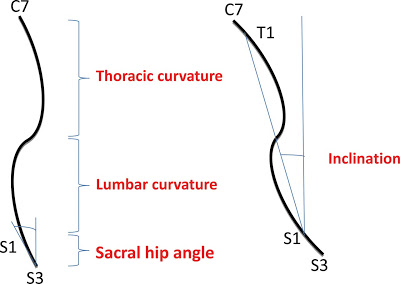
A team of researchers based in Japan discovered that the trunk angle of inclination — the angle between the true vertical and a straight line from the first thoracic vertebra to the first sacral vertebra (view image) — is associated with becoming dependent on help for activities of daily living (ADL). These activities include such basic self-care tasks as bathing, feeding, toileting, maintaining continence, dressing, and transferring in or out of a bed or chair.
“Spinal posture changes with age, but accumulated evidence shows that good spinal posture is important in allowed the aged to maintain independent lives,” the authors state.
More Read

The research team’s data were sourced from 804 participants in the Kurabuchi Study, a community-based prospective cohort study of residents aged 65 years or older in Kurabuchi Town, approximately 62 miles (100 kilometers) north of Tokyo.
The test subjects’ spinal posture was measured with a spinal mouse, which is a computer-assisted noninvasive device for measuring spinal shape. The device is guided along the midline of the spine, starting at the spinous process and finishing at the top of the anal crease.
Of the four spinal measurements taken by the device, only trunk angle of inclination was associated with future dependence in ADL — defined by the researchers as either admission to a nursing home or need of home assistance after a 4.5 year follow-up period. At that time, 15.7 percent became dependent in ADL, 7.6 percent died, and 0.7 percent moved out of the town. The group was 58 percent female.
The subjects in the highest quartiles, who had the greatest angle of spinal inclination, were 3.47 times more likely to become dependent in ADL than those in the lowest quartiles (the group with the least spinal inclination), even after adjusting covariates such as age, sex, back pain, and stiffness.
Spine-Health offers these tips:
The main factors affecting posture and ergonomics are completely within one’s ability to control and are not difficult to change. The following guidelines suggest several ways to improve posture and ergonomics, especially for people who work sitting in an office chair for most of the day.
- Know the warning signs of back pain caused by poor ergonomics and posture.
- Get up and move.
- Keep the body in alignment while sitting in an office chair and while standing.
- Use posture-friendly props and ergonomic office chairs when sitting.
- Increase awareness of posture and ergonomics in everyday settings.
- Use exercise to help prevent injury and promote good posture.
- Wear supportive footwear when standing.
- Remember good posture and ergonomics when in motion.
- Create ergonomic physical environments and workspaces, such as for sitting in an office chair at a computer.
- Avoid overprotecting posture.
Read the detail at the link above.