
The Four Accreditations
In the realm of specialty pharmacy, there are four main ways that you can become accredited. While they are generally similar in terms of process (external and internal review of policies and procedures) the breadth and scope of each one is slightly different, so you’ll need to assess all four and decide which one will be the best fit for your pharmacy.
The Four Accreditations
In the realm of specialty pharmacy, there are four main ways that you can become accredited. While they are generally similar in terms of process (external and internal review of policies and procedures) the breadth and scope of each one is slightly different, so you’ll need to assess all four and decide which one will be the best fit for your pharmacy.
CPPA
The Center for Pharmacy Practice Accreditation (CPPA) helps to raise the overall standard of care in the pharmacy environment through empowerment, continued quality improve and recognition of high quality practices. It incorporates national standards, proof of competencies and is helping to define the future of pharmacy practice. Unlike other accreditations, CPPA is already in line with the national trend toward changing payment structures and emphasizes comprehensive care.
URAC
The one accreditation you’re probably already familiar with is URAC accreditation. It’s probably the most widely referenced for specialty pharmacies, but the newer accreditations are catching up. The application process is open to any US pharmacy that dispenses prescription medication to consumers with chronic conditions, acute events or fertility drugs — and provides education and provider coordination with the prescriber. It’s a more rigorous certification process, but well worth it, as URAC accreditation is one of the most highly esteemed.
PCAB
For pharmacies that compound specialty medications, PCAB accreditation should be at the top of their priority list. The art of compounding ingredients in specific dosages for specific patients might sound a little like alchemy; and that’s because it sort of is. Before medications were mass-produced, pharmacists had to be able to compound each medication themselves, in just the way a patient needed it. We’re harkening back to this idea with patient-centered care models, so accreditations that validate a pharmacies efforts to fulfill those compounding requirements are certainly becoming more and more popular.
ACHC
The Accreditation Commission for Health Care (ACHC) is a national organization developed by homecare and alternate-site healthcare providers to establish a standard of care for those types of facilities. It’s uniquely concerned with healthcare providers from a wide array of practicing locations, and its focus is helping those providers provide optimum care for their patients. ACHC specializes in accrediting not just pharmacies, but home health, hospice, DMEPOS, private duty nurses, sleep labs and behavioral health organizations.
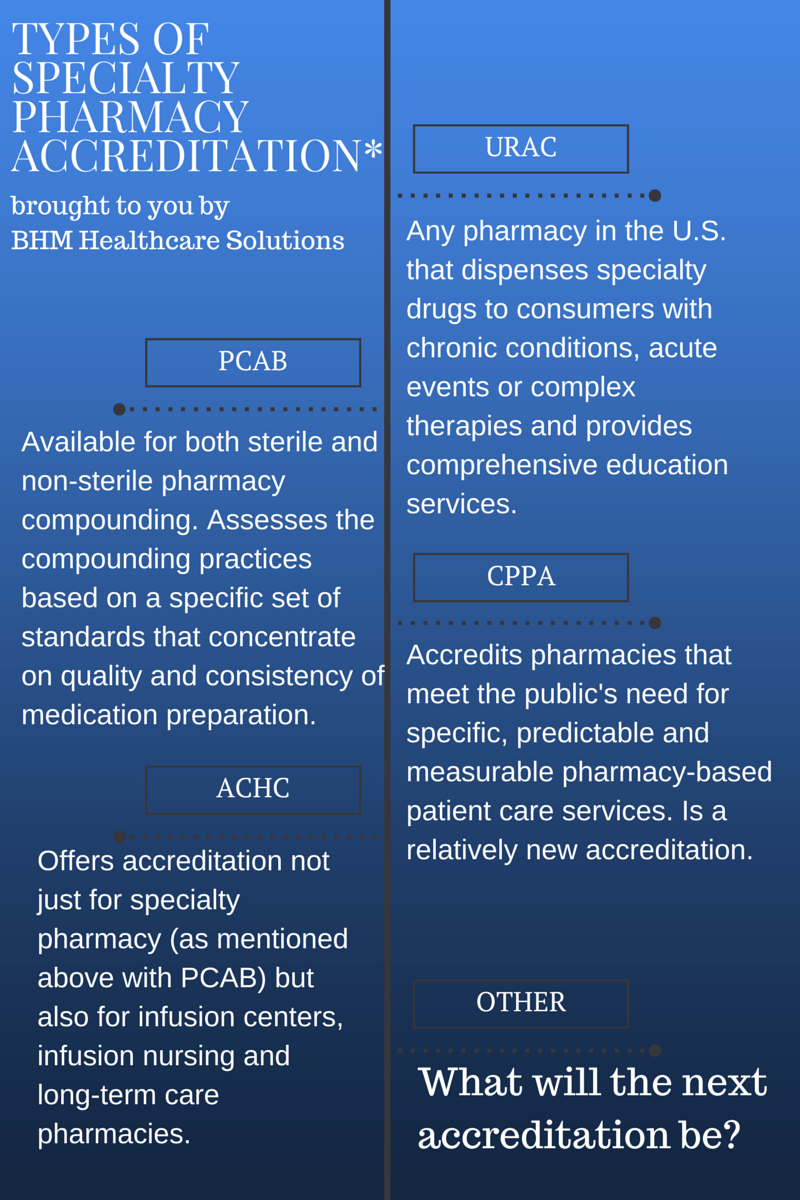
For a quick breakdown and comparison, check out BHM’s infographic below!
The post Types of Specialty Pharmacy Accreditation appeared first on BHM Healthcare Solutions.