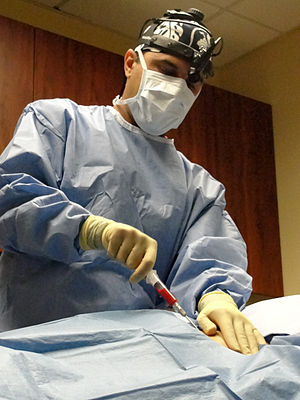

USA Today covered cosmetic surgery at medspas, and by non-plastic surgeons. This is a topic that has been covered before, and bears revisiting with the following points.
As long as doctors have difficulty earning a reasonable return in their core specialties, they will continue to move into other areas of practice.
Non-surgical doctors don’t really plan to one day pretend to practice cosmetic surgery – at least they didn’t used to. But faced with non-market determined administered fee schedules and market-based overhead, some have little choice but to attempt to escape their situation, and cash-based cosmetic procedures are one way to do that.
Rules on which type of doctor can do what type of procedure may be helpful, but can be abused.
Some plastic surgeons like to think they should have divine purview over the realm of cosmetic surgery. Being a plastic surgeon, I would benefit from such an arrangement. But it is not realistic and it is not ultimately in the best interest of consumers. Innovation and competition stem from intrusive forces, and as long as practitioners have the appropriate core skills to learn new areas of practice, stopping these does not make sense. Economic credentialing can be abused in the insurance-based as well as cosmetic areas.
Similarly, regulation of surgery facilities is reasonable for deep sedation, general anesthesia or large-volume liposuction. Facilities performing straightforward procedures under local anesthesia should be able to adhere to general good-practice standards without complex regulatory burdens. It is more important that the procedures performed are within the general scope of competence of those performing them.
Patients need to do homework to determine who should be treating them.
Some procedures are easier to learn than others; a cardiac surgeon and an ophthalmologist can both safely inject Botox. (Do not forget ophthalmologists pioneered it). But a patient who has a chest surgeon fix his detached retina and an eye doctor replace his aortic valve will likely end up blind and then dead. To some degree, regulatory boards and the need for hospital privileges can halt such practice drift far outside core areas of training, but they cannot and should not halt any practice migration. This is not in the best evolutionary interests of medical practice. There are appropriate and safe methods of expanding one’s practice area. Regulatory bodies should see to it that they are adhered to with patient safety as the primary concern.
Concerning the patient in the article, it seems fairly obvious that a nine-hour fat transfer is well beyond the typical duration for this surgery. Compartment syndrome is a known complication of fat transfer surgery, but the risk can be reduced by avoiding over-injection, especially in the lower buttock. Hopefully she will make a substantial recovery.
Related articles
- Health: MedSpas Explode In Popularity, But Are They Safe? (philadelphia.cbslocal.com)
- Cosmetic surgery laws often aren’t enough (usatoday.com)