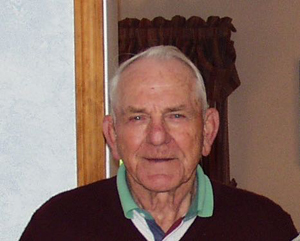
My dad was a wonderful guy who could fill the room with his personality. He grew up during the Great Depression and was a World War II veteran. I was thinking of him recently while considering how much health care delivery has changed in the last 100 years.
My dad was a wonderful guy who could fill the room with his personality. He grew up during the Great Depression and was a World War II veteran. I was thinking of him recently while considering how much health care delivery has changed in the last 100 years.
When asked about his health, my dad would always say, “I feel great. I don’t have any aches or pains.” This is telling. His generation equated pain with the need to seek care from an expert. After all, he grew up before Penicillin was discovered. During that time, given what we knew about health and disease and what we could offer for treatment, it makes sense that people sought the care of a physician when they ‘weren’t feeling well.’
We’re now in an era where chronic illness management and prevention accounts for 70% of health care costs. Of the forces responsible for illness — bad luck, bad genes and lifestyle — lifestyle is the predominant cause of chronic illness.
Our public health officials understand this important change, but consumers by and large still do not. They still mostly seek care when there is some symptom or acute need. This is problematic because so much lifestyle-driven illness is silent for years (hypertension, pre-diabetes, obesity) and only generates symptoms when things are pretty far along.
The other interesting aspect of my father’s adage is the denial underneath it. He was really saying, at some level, “If I don’t have any symptoms, I’d just as soon avoid the doctor so I won’t get any bad news.” This psychology too is quite prevalent among consumers today, adding to the challenge of raising awareness of lifestyle-driven illness. It is easy and human nature, to live in denial.
Another childhood memory I have is how kind my mom was whenever I was under the weather. She gave us extra love, as if that would help the illness improve more rapidly. Given that most childhood illnesses are viral infections, I suspect her added affection didn’t change the course of any illness, but she made it tolerable to be sick.
We all want to be cared for. This enables a child-like approach to the health care system. It is common for patients to come to see us joking about non-compliance and begging, “Don’t yell at me.” Likewise, they boast about their doctors, implying that they can put all of their worries aside: “She’ll make sure I am ok. I trust her.”
This triad of not thinking about health until symptoms arise, not wanting to hear bad news and abdicating responsibility for care to a health care provider accounts for a big part of why it is so difficult for physicians to get folks’ attention before they get sick.
Connected health can help us counteract these challenges. The vast array of sensors now available and their attendant feedback loops make it hard to ignore when we’re not on track with our health. Even if we don’t feel symptoms, we can be reminded several times per day of how we’re doing with respect to a given health parameter. When these data are shared with a health care provider, it becomes more difficult for individuals to ‘abdicate responsibility,’ something we’ve called the sentinel effect. When patients know their objective health data is being shared with a provider, they naturally up their game to appear to be compliant and interested in their health. No one wants to look like a slacker in front of their doctor.
But we still have challenges when it comes to denial and individuals abdicating responsibility for their health. This is magnified because we live in a libertarian society. It is our right to ignore our health if we choose to; and because our politicians want to offer us ‘coverage,’ we can still get our bills paid in the face of unhealthy lifestyle and behaviors.
What tools do we have to deal with this challenge?


- Incentives/rewards. We can offer individuals rewards for achieving health goals. Our connected health sensors can be the source of objective data to automate decision-making around those goals.
- Penalties. As a colleague recently said to me, “There is a continuum. You start with encouraging your workforce not to smoke and offering them rewards for not smoking. Next, you give them notice that those who continue to smoke will pay a higher insurance premium. Finally, you institute a policy to not hire smokers.”
Should we follow this approach with other lifestyle/habits such as physical activity and diet? Does it seem to invasive? What do you think?