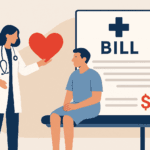
 Health costs are one of the greatest financial burdens our country faces today and will continue to face in the coming years. Patients, doctors, caregivers, and employers are plagued by the high costs of hospital tests and procedures, medical bills, health insurance and prescription medications.
Health costs are one of the greatest financial burdens our country faces today and will continue to face in the coming years. Patients, doctors, caregivers, and employers are plagued by the high costs of hospital tests and procedures, medical bills, health insurance and prescription medications. To some degree, these unreasonably high costs within the healthcare system are a result of a lack of communication between necessary parties, increasing challenges placed on physicians to assure treatment accuracy, and mis-information between doctors and their patients. In order to create a cost-effective, efficient health care system, doctors and patients must work together and use the lessons they learn from each other to reduce financial harm.
At Costs of Care, we have developed ten lessons to assist patients and reduce the financial risk associated with receiving care. Although far from comprehensive, these points provide a starting point for patients and raise topics to question during care. Here are our “top ten” lists for patients:
Ten Lessons Patients Have Taught Us to Help Protect Them From Financial Harm

1) Try to have a price estimate available for the tests and procedures that you perform most often.
2) Be careful stating absolute prices, as out-of-pocket expenses can vary.
3) When faced with a potentially dangerous situation for themselves or their family, patients are particularly vulnerable to unnecessary tests and treatments. It is critical to help them understand the value of the care you are providing.
4) Less is often more – one of the biggest consequences of unnecessary tests is that they may lead to more unnecessary tests.
5) Emergencies happen when we least expect. Encourage your young and healthy patients to purchase insurance even if they rarely need medical care.
6) Weigh the risks and benefits of ruling out unlikely conditions with the patients’ and the systems’ financial burden.
7) Even when patients go to an “in-network” hospital, if the physician providing the care is “out-of-network,” patients will be charged extra. Encourage them to verify whether the physician who is treating them accepts their insurance.
8) Avoid sending tests “out of academic curiosity.” Not only does this drive up the cost of care, but some patients might have to pay out of pocket for them.
9) Encourage patients to call their insurance company before a visit or bring you a copy of their benefits, deductibles and co-payments you can keep in their file.
10) As part of your history and physical, assess each patient’s financial risk and make sure you do no harm.
Ten Lessons Patients Can Learn To Protect Themselves From Financial Harm
1) Remember: high cost does not necessarily equal high quality
2) Preventative care is not only medically beneficial, but also financially advantageous
3) Utilize urgent care after hours; it is usually cheaper and faster than emergency department services.
4) It can be very hard to obtain an estimate of costs prior to a visit, test, or procedure. You can spend hours trying to find this information and get shuffled from nurses to physicians to coordinators to administrators. Try to learn who, in your clinic or your hospital, is in charge of estimating costs
5) Use websites, blogs, and online materials to learn about the costs of care for different medical centers. Change Healthcare and Transparency messenger are two sites that can help patients compare prices.
6) Call the clinic, hospital, or lab ahead of time to check prices. Sometimes just by calling you can receive a discount as large as 60% of the bill!
7) If you have to pay out of pocket, making a first payment on the day of the visit can reduce your bill significantly.
8) In almost every city, there are free clinics and community centers where you can obtain basic care.
9) Even when you go to an “in-network” hospital, if the physician providing the care is “out-of-network”, you will be charged extra. Always ask if the physician who is treating you accepts your insurance.
10) Emergencies happen when we least expect. Save some money for unexpected situations!
These “top 10” lists were compiled and edited from learning points generated by the Costs of Care’s 2012 Essay Contest, which provided insight into the financial challenges patients faced in the healthcare system. The 2012 contest sought anecdotes from patients and their caregivers illustrating opportunities to improve healthcare. Costs of Care has posted these stories on the blog and continues to run these stories each Monday throughout the year.
Michele Rhee, a member of Costs of Care’s board of directors, weighed in on the lists not only as a health care professional, working as a project manager at The National Brian Tumor Society, but also as a former patient. She made three distinct points about what doctors and patients need to keep in mind and learn from one another to create the high quality, cost efficient care. First, it is important for both patients and doctors to remember what type of patient or doctor they are prior to the visit. If a patient knows he or she is the type who prefers to be involved in decisions, then it would be best if they see a doctor who also prefers collaborating, rather than just instructing the patient on what actions to take. Second, to achieve the best care, it is vital for patients and doctors to communicate with each other. Finally, Ms. Rhee points out patients sometimes erroneously assume that doctors know how much tests and various forms of care will cost and what insurance will cover. It is critical for doctors and patients to work together, and learn lessons from each other, in order to create an accessible, high-quality, and cost-effective health care system. Hopefully, these lists provide a solid tool for patients to use as a start to their more comprehensive healthcare financial discussion.
(medical bankruptcy / shutterstock)