This week we had a double dose of news about the fight against cancer. And there is more to come, as two major medical conferences take place almost simultaneously. Leading cancer doctors, researchers and members of the life sciences community are excited about the possibilities of immunotherapy in the treatment of cancer. Immunotherapy, where the body’s own immune system is enlisted to fight cancer, is an example of the kinds of advances being made in personalized medicine.
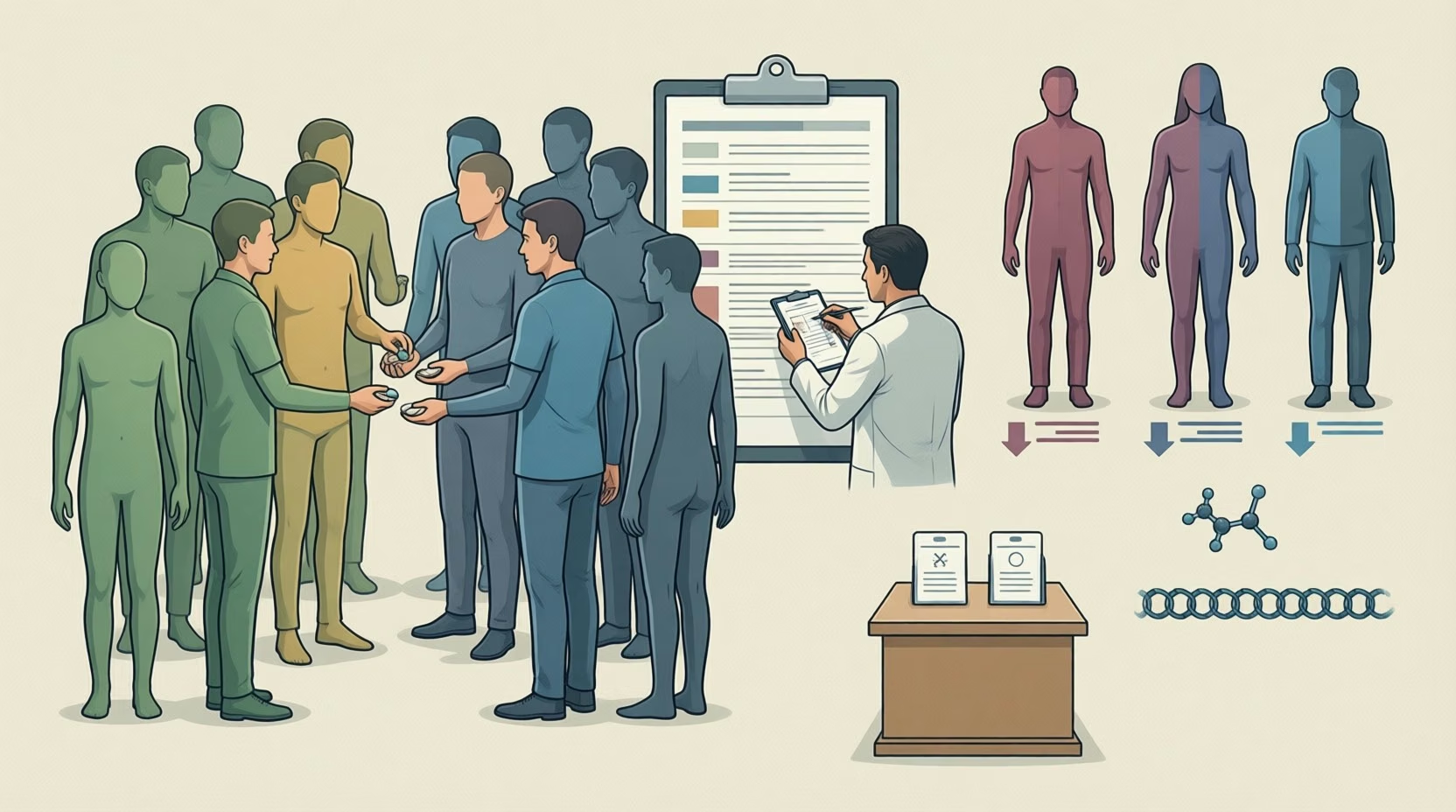
On Sunday, CBS’s 60 Minutes aired a segment about the pioneering work being done by billionaire physician Dr. Patrick Soon-Shiong. The work that Dr. Soon-Shiong is doing is focused on major investments in genomic sequencing using technology to map the precise genetic mutations that cause cancer. Also, Dr. Soon-Shong is challenging the way we view cancer. Rather than classifying it according to location in the body, he believes we should be looking at specific mutations, regardless of where the tumor is located. In other words, a lung cancer tumor may respond well to a treatment typically used in pancreatic cancer, if the mutation is similar. While this approach to cancer is not unique to Dr. Soon-Shong, what is unique is the scale of his personal investment in genomic sequencing.
I believe that personalized medicine will eventually unlock the mysteries of cancer and lead to cancer becoming curable. The speed of progress in research and the understanding of genomics, proteomics and molecular diagnostics over the past five years alone convinces me of this. But having a better understanding of the underlying processes involved in cancer is one thing, having the treatments available to trigger the individual patient’s immune system to kill the cancer is a major challenge.
The good news is that the pharmaceutical industry is harnessing the progress being made in personalized medicine to develop highly targeted cancer treatments. On Saturday the Wall Street Journal reported from the American Society of Hematology annual meeting in San Francisco that two very promising immunotherapies, nivolumab from Bristol- Myers Squibb and Keytruda from Merck showed significant results in Hodgkin lymphoma. Both are PD-1 inhibitors, or “immune checkpoint inhibitors.” PD-1 is a protein that acts as an immune system brake. Some tumors are able to use PD-1 to evade attack by the immune system. By inhibiting PD-1, the immune system is able to attack the tumor.
In a 23-patient study of Bristol-Myers’s drug nivolumab, 87% of patients had either a partial or complete remission of their disease, and the other three had stable disease, meaning their cancer didn’t get any worse after treatment. The study of Keytruda, which is already approved for certain melanoma patients, found that 19 of 29 patients, or 66% had a partial or complete remission of their disease while disease in six other patients remained stable.
These are two small studies, and larger trials will need to be conducted to confirm these results. But what is interesting is that both studies demonstrate the power of personalized medicine. These kinds of response rates were almost unheard of in the days before diagnostics and personalized medicine became an integral part of drug development. And this is a key reason why the genomics, proteomics, and the molecular diagnostics markets are experiencing significant growth.
The San Antonio Breast Cancer Symposium starts today, and I’m excited to be attending this year’s event with some clients. I’m sure we’ll see more exciting news coming from that conference.
I’ve said it before, but it deserves to be repeated. This is an exciting time to be working in life sciences. I believe that technology, including computing technology, cloud technologies and Big Data analytics, is driving enormous progress. Pharmaceutical companies, diagnostics companies and the medical community have better tools available than ever before, and I believe these technologies will ultimately enable us to unlock some of our greatest healthcare challenges, including finding a cure for cancer.