By using this site, you agree to the Privacy Policy and Terms of Use.
Accept
Health Works CollectiveHealth Works CollectiveHealth Works Collective
  • Health
    • Mental Health
  • Policy and Law
    • Global Healthcare
    • Medical Ethics
  • Medical Innovations
  • News
  • Wellness
  • Tech
Search
© 2023 HealthWorks Collective. All Rights Reserved.
Reading: Wellocracy Is Coming! Watch For It
Share
Notification Show More
Font ResizerAa
Health Works CollectiveHealth Works Collective
Font ResizerAa
Search
Follow US
  • About
  • Contact
  • Privacy
© 2023 HealthWorks Collective. All Rights Reserved.
Health Works Collective > Wellness > Wellocracy Is Coming! Watch For It
Wellness

Wellocracy Is Coming! Watch For It

JosephKvedar
JosephKvedar
Share
7 Min Read
Image
SHARE

Image

After working at this remote patient monitoring game for about 10 years now, we are ready to bring self-care to consumers – couch potatoes, weekend warriors and all of us in between hoping to live a little healthier, lose a few pounds or just feel a little better.  Meet Wellocracy™!

Image

After working at this remote patient monitoring game for about 10 years now, we are ready to bring self-care to consumers – couch potatoes, weekend warriors and all of us in between hoping to live a little healthier, lose a few pounds or just feel a little better.  Meet Wellocracy™!

More Read

isolated-hapifork
What Happens When Mindfulness Meets Tech?
Diseases and Conditions That Cause Painful Side Effects
Six Mattress Types to Avoid Health Issues Caused by Poor Sleep
Natural Approaches and Methods for Managing Depression
Advancing Technologies in the Treatment of Sleep Disorders

The goal of Wellocracy is at once simple and daunting – to get America moving, and to motivate our citizens to move to a healthier state. It turns out that the formula is straightforward:  a) track your activity, b) find your individual set of motivational tools and c)  find ways to increase your activity without disrupting your life.

But let’s take a quick look at how we got here. In the early days of remote monitoring, we thought the big value add would be giving a doctor or nurse a more rich data stream about your vital signs and this would enable her to make better just-in-time decisions about your care plan.  Turns out, we were right. The best example of this is the 50%  reduction in hospital readmissions we’ve seen by employing home telemonitoring for our heart failure patients.

But the biggest insight that I’ve gained in my 18+ years of working in connected health came when some of our earliest patients on that same telemonitoring program began to significantly improve their self-care.  We noticed that they used their daily monitoring results (weight, blood pressure, heart rate) as a numeric yardstick for their progress, enabling them to better understand the basic pathophysiology of congestive heart failure. They began to realize that salt intake leads to fluid retention and if your heart is weak, a build up of fluid in the lungs can be quite dangerous.  As a result, they started being much more fastidious about salt and fluid balance.

As we observed this phenomenon, we broke it down into two sets of factors we could study:  the use of objective data in feedback loops and the use of motivational psychology to help our patients strive to keep those data in the right range.  In most cases, the motivational tool was a phone call from one of our telemonitoring nurses (highlighting our partnership with Partners Healthcare at Home).  One lovable and amusing quote from a patient come to mind:  “I can’t eat fudge because I can’t fudge my data.”

Another profound, reproducible finding over the years has been the attachment patients feel for these home monitoring devices.  Patients almost universally plead not to be taken off a remote monitoring program.  This led us to the observation that self-tracking is contagious or in Internet parlance, ‘sticky.’  Most people enjoy seeing how their lifestyle affects some sort of number.  Self-tracking keeps health top of mind and can keep people motivated.

A sneak peak into Wellocracy…

I thought for years that if there was some way to bring this insight, this stickiness into the homes of regular folks that we would see a corresponding improvement in health and wellness in the population at large.  As the quantified-self movement caught on to self-tracking and the deluge of self-tracking devices and apps that is now available came on the market, the conditions improved even further.

Then I met two impressive colleagues that shared this vision for bringing connected health into the living room, namely Carol Colman, an accomplished author specializing in the self-help genre, and Justin Mager, personal trainer turned physician and expert in lifestyle interventions.  Soon we were joined by media relations maven extraordinaire, Gina Cella and Wellocracy was born.  Along the way, we picked up some awesome advisors including Andy Donner, James Fowler, Emily Hackel, David Rose and Charlotte Yeh.

How will we achieve our goal to motivate individuals to move to a healthier state? We start with the premise that the self-tracking market is crowded, confusing and oriented toward techies. We will simplify the language and drive home the value through a series of books (short ebooks to be followed by a traditional book later).  These books will be tightly coupled to a website where we can build community around Wellocracy and continue to update our members’ knowledge about the fast changing field of self-tracking and behavior change.

We’re excited to have the opportunity to launch our first ebook and our website at the Consumer Electronics Show, January 8, 2013. There, at the Silvers Summit, I’ll have the pleasure of moderating a panel on health apps for the 50+ crowd.  I hope we see you there. In the meantime, we’re looking for early adopters to join the Wellocracy community and share their own stories about how the combination of self-tracking, motivational tools and steps and bursts can lead to improved health. If you are interested in learning more, please comment on this blog or email me at jkvedar@partners.org

I’m excited to be working with Carol, Justin, Gina and our advisors as we launch this effort to improve the health of our nation. More to come on Wellocracy, as we ready for the official launch in January…

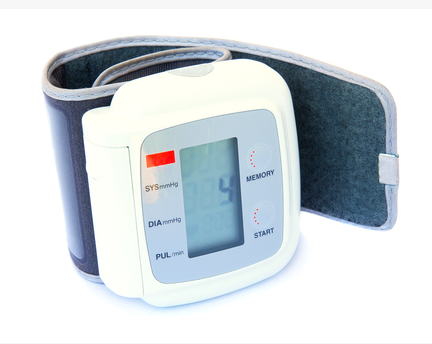
photo: selfmonitor/shutterstock


TAGGED:self-monitoring
Share This Article
Facebook Copy Link Print
Share

Stay Connected

1.5KFollowersLike
4.5KFollowersFollow
2.8KFollowersPin
136KSubscribersSubscribe

Latest News

close up of hands holding baby feet
What to Record After a Preventable Birth Injury
Health care
March 14, 2026
Person Stressed Out in Courtroom
How Legal Challenges Can Affect Health and Wellness Journeys
Policy & Law
March 14, 2026
high-risk mdical case
Countdown To Care: What Happens In The 48 Hours Before A High-Risk Medical Case
Health Infographics
March 12, 2026
healthcare facilities
Behind The Cabinets: Why Secure Storage Matters In Modern Healthcare Facilities
Global Healthcare Infographics
March 12, 2026

You Might also Like

Home HealthWellness

How To Eat A Healthy Diet For A Thriving Lifestyle

May 19, 2019

A New Call-to-Action: Strong Is the New Skinny!

January 23, 2013
Mental HealthWellness

How to Create A Bedtime Routine That Supports Restful Sleep?

October 19, 2020
The ACA has put patients at the center of healthcare services. A patient-centric healthcare approach in this digital era means a revised definition of quality in the physician-patient relationship. When it comes to healthcare services, patients shell out a hefty amount from their pocket and want nothing less than the best. The services in healthcare are no longer limited to just cost as consumers now evaluate quality and experience in the same equation. Research highlights from the 2015 Healthcare Consumer Trends by National Research Corporation states that reputation in healthcare matters more to consumers when choosing a brand than any other industry, e.g. hospitality, retail, airline, etc. The new generation of quality measurements in healthcare require a different mind-set and a different 'toolbox' to handle the hurdles. It’s the need of the hour for healthcare providers and others across the healthcare value chain to adopt the patient-centric approach for surviving in the vast competitive ocean of healthcare services. Patient-centric care is an approach that develops through effective communication, empathy and a positive physician-patient relationship. The primary purpose is to improve patient care outcomes and satisfaction and to reduce patient symptoms and unnecessary costs. It’s a win-win situation for both physicians and patients. While healthcare providers are able to support their patients in becoming more compliant with treatment and management of their conditions/diseases, patients feel more satisfied with the care that they are receiving. PwC’s Health Research Institute’s annual report 2016 states that health systems should keep an eye on the consumer experience as they expand and extend. More partnerships and more caregivers could mean confusion for patients and poor customer experiences. To differentiate their practice among competitors, patient satisfaction can be used as a competitive distinguishing factor. Although patient satisfaction cannot really provide tangible benefits, but an experience that exceeds patient expectations for what a practice/hospital can provide is very important as it creates loyal patients who return for future health needs and refer their family and friends. Happy and satisfied patients are a secret marketing weapon for healthcare providers, whether they are physicians, dentists, physiotherapists or hospitals. Your patients are the new-age digital health decision-makers. In this era of Internet and social media, they now have multichannel access to information related to health. Needless to mention, they have gained new power to make their decisions; whether it’s choosing a healthcare provider or referring a physician to family and friends. By converting your satisfied patients to be your brand advocates, you can capitalize and use their voice as an effective marketing strategy to reach out to many other potential patients. To strive and thrive, in the U.S. many healthcare organizations are applying patient-centric approaches to healthcare. It’s all about what matters to patients, so it makes a lot of sense for the healthcare industry to place patients' healthcare experience at the center of their policies and procedures. The best deliverables are a combination of great communication for a positive physician-patient relationship, disciplined measurement and analysis of patient feedback and commitment to technology innovation – the formula for improving patient engagement and care.
BusinessHealth ReformWellness

The Link Between Patient Satisfaction and Long-Lasting Relationships

April 28, 2016
Subscribe
Subscribe to our newsletter to get our newest articles instantly!
Follow US
© 2008-2025 HealthWorks Collective. All Rights Reserved.
  • About
  • Contact
  • Privacy
Welcome Back!

Sign in to your account

Username or Email Address
Password

Lost your password?