I’ve attended several health conferences over the past couple of months and whether the conversations are about the Affordable Care Act allowing more people to get preventive care, using more home care instead of institutional care, or caring for our aging population, one topic that consistently comes up is the get preventive care, using more home care instead of institutional care, or caring for our aging population, one topic that consistently comes up is the projected shortage of primary health care providers.
There are numerous ideas on the table to address this: expand scope of practice for nurse practitioners and physician assistants, provide incentives or loan forgiveness for med students willing to go into primary care, or use telemedicine to improve efficiency. All reasonable ideas… but I wonder about the latest telemedicine venture from a company called Doctor on Demand.
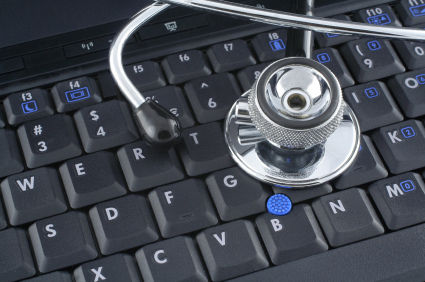 This virtual venture allows anyone to have a face-to-face consult with a physician for $40 per visit — about the same as many insurance co-pays. Users can access a licensed US provider 24/7 from any computer, tablet or smartphone. They can discuss symptoms, ask questions, get answers to non-emergency medical questions, specialist referrals, and even obtain short-term prescriptions or refills.
“We created Doctor On Demand to help modernize and transform the health care system,” Adam Jackson, co-founder and CEO, Doctor On Demand said in a press release. “Our main goal is to ease the stress patients encounter while navigating the U.S. health care system and bring the focus back to quality and convenience for both patients and doctors. We’re helping patients receive high-quality medical care without having to leave their homes or offices, therefore cutting down time, cost and worry.”said in a press release,
Some of the common health issues the company says it can address include colds, rashes, coughs, sinus infections, muscle and sports injuries, pediatric care including fever and vomiting, eye problems, and urinary tract infections. All this without a provider ever laying hands on a patient. Instead, patients can upload high-resolution photos to help with diagnosis.
I’m a strong proponent of telemedicine — under the right circumstances. Maybe I’m just skeptical by nature, but I question this approach.
Telemedicine works well when there is an existing relationship between a patient and a provider who knows and understands that patient’s quirks, pre-existing conditions, compliance issues, outliers or other important factors affecting a his or her well-being.
Telemedicine works when there’s clinical documentation that supports referral to a specialist who may be 100 miles away from a rural clinic, or when a home health care nurse has an opportunity to check up on that patient in his or her home and make a comprehensive visual assessment. The VA, among others, has been using telemedicine successfully for many years – as an adjunct, not a total replacement.
When a clinician knows and understands a patient’s dynamics, routine observations and video chats absolutely can save time and costs. There are currently several bills in Congress that support expansion of virtual visits. But I don’t know if this is what they had in mind.
Can telemedicine work like it’s supposed to when a clinician has no knowledge of the patient aside from what’s presented via Web cam in a 10 minute chat?
There are still many unanswered questions.
How does a professional diagnose an unfamiliar patient without actually doing some of the physical assessments — checking for swollen lymph nodes, for example, or peering down a patient’s sore throat or into the sinuses? How many prescriptions will be handed out unnecessarily? What if that “minor” issue is really more serious than the patient lets on?
Many people will see this type of “virtual” care as a plus — no travel or waiting times, instant gratification. Fast has its place. What about thorough?
I’ll be following the concept of virtual practices with curiosity. Perhaps they will prove to be just the panacea the health care world needs. Perhaps not. Stay tuned.
Photo credit: jfcherry / Foter.com / CC BY-SA