 Baby Boomers and seniors may not be the early adopters of social sites like Foursquare, Instagram or Vine, but if taught how to use a mobile healthcare app they will cling to it for dear life.
Baby Boomers and seniors may not be the early adopters of social sites like Foursquare, Instagram or Vine, but if taught how to use a mobile healthcare app they will cling to it for dear life.
Boomers and seniors love new apps, but they really want to be shown how to use them. Having someone teach them how to operate the app generally makes the difference between whether they will use it or not.
Each week, I lunch with about 10 to 12 suburban women whose ages range from 50-85. It’s kind of like Alison Janney meets Betty White and the Golden Girls. While our backgrounds differ, we all share our love for smartphones and tablets.
We trade stories about our favorite apps, do demos with our photos, and each week someone excitedly shows off their newest find.
Barb, the 82-year-old librarian loves the medicine adherence app I proudly display. “Oh that will be great for my husband, he’s always forgetting to take his pills, and I can’t always be around to remind him. Show me how to use it.”
Aside from making calls and texting her sons, Marcy, 53, uses her smart phone primarily to take photos of her growing chocolate Labrador puppy. But racing around with the little guy has given her ankle pain. It annoys her, but she’s not ready for a doctor’s visit, so I showed her how to use Sharecare on her tablet and she was in heaven.
“Wow, this is great. I can get the physical therapy exercises right here and do them at home. Thank you so much,” she beams, flaunting her new find to the others.
Then there’s Janet, the 60-year-old traveler, who sometimes needs a doctor when she’s away from home. A fellow Boomer demonstrated ZocDoc, and immediately she was downloading it on her smartphone.
In fact, when I suggested another app called Urgent Care that combines one-touch access to a nurse for advice 24/7, the whole group erupted.
“What’s that called?” Julie shouts across the table.
“I want that,” Andrea adds.
When I explain there is an introductory fee of $3.99 if the nurse had to escalate the call to a board-certified physician if required–any time day or night—the crowd roars with glee.
“That’s fantastic,” “Who cares, you don’t have to leave your house,” Barb says.
In fact, a national independent survey conducted by our parent company Mitchell Research & Communications, Inc., showed that 71% of Baby Boomers smartphone owners would pay for a medical app.
While all of this may be music to app developers ears, it’s important to see that the reason the 50+ crowd was so excited about the apps. It was because someone was showing them how to use them.
They liked and needed the training and interaction.
Realistically, app developers can’t tutor individual users, so their designs and language must pass the Boomer /senior test. What’s intuitive to a young person is not intuitive to mature users.
Here are just a few of the basic questions developers should ask themselves:
- Is the app speaking their language?
- Can they read the print?
- Is the color scheme easy on their eyes?
- Are they familiar with the buttons?
- Is the social networking feature out of sight, and only available once the user is hooked on the app?
Boomers and seniors want to adopt technology and they are willing to pay for it. They are a prime demographic for early adoption for medical apps. But they need the app to work for them and won’t fight with it to develop a relationship. This is not a group that you can “build it and they will come.”
Nope, find out what they want, give it to them, and they will pay.
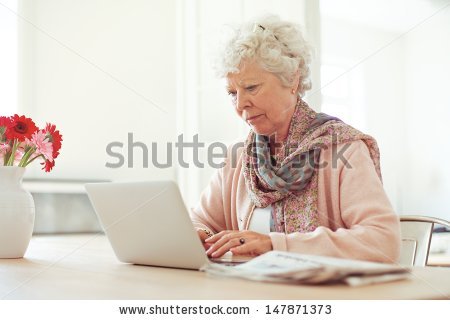
(image: using mhealth / shutterstock)