There’s a joke that’s often shared by medical students: “What’s the difference between God and a doctor? God doesn’t think he’s a doctor.” Regardless of your spiritual orientation, the line illustrates the lofty perch (and decision-making power) occupied by physicians in today’s healthcare settings. But, as we at Popper and Co. have discussed, a new wave of consumer power may eventually topple this perch.
There’s a joke that’s often shared by medical students: “What’s the difference between God and a doctor? God doesn’t think he’s a doctor.” Regardless of your spiritual orientation, the line illustrates the lofty perch (and decision-making power) occupied by physicians in today’s healthcare settings. But, as we at Popper and Co. have discussed, a new wave of consumer power may eventually topple this perch.
A recent story in the Wall Street Journal by author Doc Searls, “The Customer as a God,” focused on the growing power of customers using electronic devices for daily communication, shopping and other activities. Most current product development, the article points out, focuses on improving the supply of products to the customer, not involving the customer in making those products. This however, is changing. The story projected a future in which people use their devices to pick out clothes, replace parts for appliances, and shop for products—all unencumbered by invasive marketing tracking methods, corporate service plans, and other systems that, as Searls says, “tend to herd customers as if they were cattle.”
I saw a number of parallels between this view of today’s and tomorrow’s consumer electronics world and the healthcare industry. In the consumer electronics world, internet/wireless service providers determine how the consumer will use devices and control the internet that connects them. Meanwhile, in healthcare, physicians and hospitals “provide” the care that patients are told to accept. Fast forward about 10 years, and the providers are no longer in charge—the consumers are.

Just as in the consumer electronics world, healthcare is not yet completely in the hands of consumers. As digital health pioneer Eric Topol said, the medical establishment is replete with entrenched institutions and individuals resistant to this type of change.
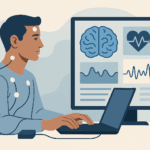
“We are moving away from information asymmetry, ‘Doctor Knows Best,’ to a true democratization of medicine,” he said. “Like in the 1400s with the Gutenberg printing press, people learned to read—that is coming with each individual’s key medical data, like blood pressure, glucose, heart rhythm, displayed on their smartphones.”
While many refer to “personalized medicine” as the treatments and diagnostics that arise from our advancing knowledge of biology to an individual level, the term is starting to mean something else; the consumer demand for treatments that are tailored to their personal needs and aspirations (as well as a tailored treatment for disease).
The “inflection point” of medicine—where portable devices, low-cost genetic screening, and a wealth of accurate online health information all merge to allow a consumer to call the shots—isn’t here yet, but it’s close. Perhaps the ancient Greek writer Homer had it right in The Iliad, where men (and a woman or two) fought alongside the gods.
Do you see the same future of healthcare? How close are we to medicine’s inflection point? What would it take to create a new consumer power? Please share your views with us.