By using this site, you agree to the Privacy Policy and Terms of Use.
Accept
Health Works CollectiveHealth Works CollectiveHealth Works Collective
  • Health
    • Mental Health
  • Policy and Law
    • Global Healthcare
    • Medical Ethics
  • Medical Innovations
  • News
  • Wellness
  • Tech
Search
© 2023 HealthWorks Collective. All Rights Reserved.
Reading: Eating Right to Fight Cancer
Share
Notification Show More
Font ResizerAa
Health Works CollectiveHealth Works Collective
Font ResizerAa
Search
Follow US
  • About
  • Contact
  • Privacy
© 2023 HealthWorks Collective. All Rights Reserved.
Health Works Collective > Wellness > Eating Right to Fight Cancer
Wellness

Eating Right to Fight Cancer

Liz Seegert
Liz Seegert
Share
2 Min Read
The Perfect Snack Combo
SHARE

It’s not just what you eat, but how you eat that keeps you healthy, say researchers at the MD Anderson Cancer Center in Houston.

It’s not just what you eat, but how you eat that keeps you healthy, say researchers at the MD Anderson Cancer Center in Houston.

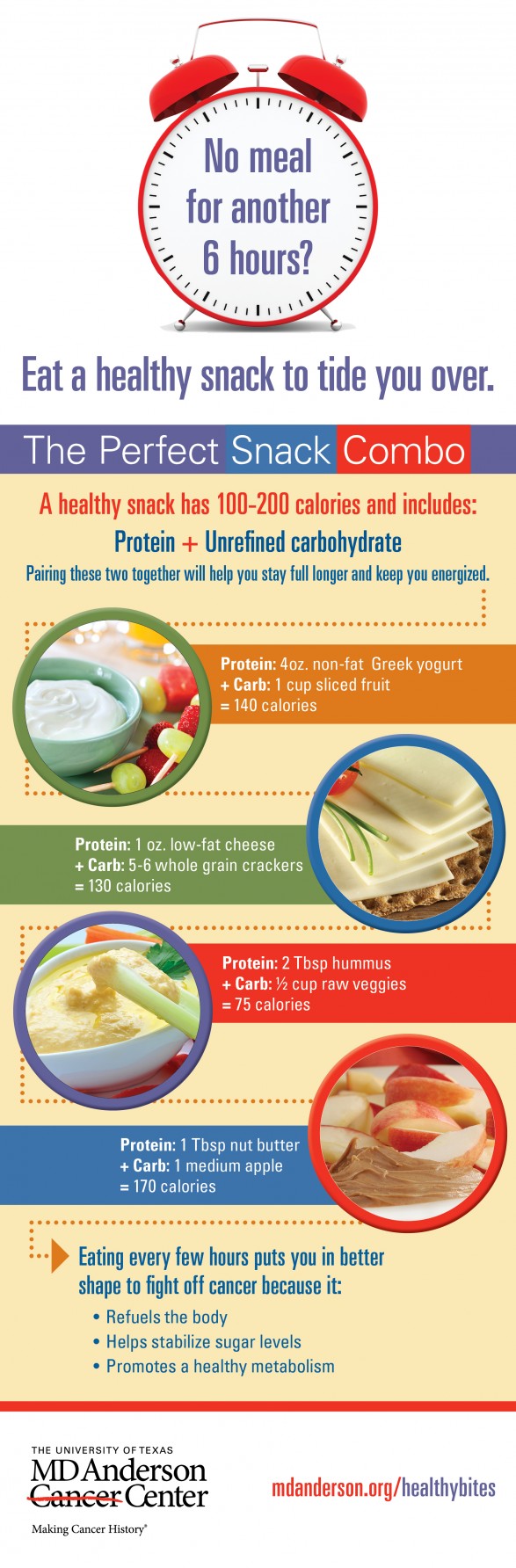
Using the right combination of unrefined carbs and protein (100-200 calories) and snacking every few hours, keeps blood sugar levels steadier, and your body healthier.  “Eating a healthy meal or snack every few hours refuels your body and puts you in better shape to fight off diseases like cancer,” Mary Ellen Herndon, an MD Anderson wellness dietician said in a statement.  Healthy snacking is encouraged if the next meal is more than six hours away.

Most of us already know this but frequently ignore the advice. It’s easy to tune out nutritional recommendations and reach for high carb, high sugar, empty-nutrient foods – soda, candy, chips – for a quick boost. Some of us (including me) may  skip a meal because we’re either “too busy” to stop or think it will help take off some pounds.

More Read

CVS stops selling cigarettes
CVS Kicks the Habit, with Implications for Consumer-Centered Healthcare
Hospital or Hotel? Luxury Hospitals Entice Patients
4 Ways to Stay Healthy While Working in Healthcare
Is Collagen Therapy a Worthwhile Treatment for Aging Adults?
4 Tips to Get the Best Health Benefits from Practicing Yoga

“Skipping meals might seem like a quick and easy way to lose weight,” Herndon said. “But starving your body of essential calories can actually lead to weight gain over time.”

The Center’s infographic [below] is an “in your face” reminder.

I’m curious whether infographics get your attention or if they just visual clutter to ignore? Let me know.


The Perfect Snack Combo


TAGGED:infographicnutrition
Share This Article
Facebook Copy Link Print
Share

Stay Connected

1.5KFollowersLike
4.5KFollowersFollow
2.8KFollowersPin
136KSubscribersSubscribe

Latest News

nurse leaders
Shaping Tomorrow’s Healthcare: The Role of Nurse Leaders
Nursing
March 10, 2026
Nursing shortage
Does Educational Rigor Negatively Impact the Talent Pool for Nursing?
Career Nursing
March 9, 2026
How Bottleless Office Water Coolers Support Corporate Sustainability Goals
eHealth Fitness Health lifestyle
March 9, 2026
public health housing
Structural Integrity in Homes and Its Impact on Public Health
Public Health
March 5, 2026

You Might also Like

Why Your Aging Parent May Be at Risk for Re-Hospitalization

September 12, 2013
ObesityWellness

How to Treat Teen Eating Disorders

September 24, 2021
The ACA has put patients at the center of healthcare services. A patient-centric healthcare approach in this digital era means a revised definition of quality in the physician-patient relationship. When it comes to healthcare services, patients shell out a hefty amount from their pocket and want nothing less than the best. The services in healthcare are no longer limited to just cost as consumers now evaluate quality and experience in the same equation. Research highlights from the 2015 Healthcare Consumer Trends by National Research Corporation states that reputation in healthcare matters more to consumers when choosing a brand than any other industry, e.g. hospitality, retail, airline, etc. The new generation of quality measurements in healthcare require a different mind-set and a different 'toolbox' to handle the hurdles. It’s the need of the hour for healthcare providers and others across the healthcare value chain to adopt the patient-centric approach for surviving in the vast competitive ocean of healthcare services. Patient-centric care is an approach that develops through effective communication, empathy and a positive physician-patient relationship. The primary purpose is to improve patient care outcomes and satisfaction and to reduce patient symptoms and unnecessary costs. It’s a win-win situation for both physicians and patients. While healthcare providers are able to support their patients in becoming more compliant with treatment and management of their conditions/diseases, patients feel more satisfied with the care that they are receiving. PwC’s Health Research Institute’s annual report 2016 states that health systems should keep an eye on the consumer experience as they expand and extend. More partnerships and more caregivers could mean confusion for patients and poor customer experiences. To differentiate their practice among competitors, patient satisfaction can be used as a competitive distinguishing factor. Although patient satisfaction cannot really provide tangible benefits, but an experience that exceeds patient expectations for what a practice/hospital can provide is very important as it creates loyal patients who return for future health needs and refer their family and friends. Happy and satisfied patients are a secret marketing weapon for healthcare providers, whether they are physicians, dentists, physiotherapists or hospitals. Your patients are the new-age digital health decision-makers. In this era of Internet and social media, they now have multichannel access to information related to health. Needless to mention, they have gained new power to make their decisions; whether it’s choosing a healthcare provider or referring a physician to family and friends. By converting your satisfied patients to be your brand advocates, you can capitalize and use their voice as an effective marketing strategy to reach out to many other potential patients. To strive and thrive, in the U.S. many healthcare organizations are applying patient-centric approaches to healthcare. It’s all about what matters to patients, so it makes a lot of sense for the healthcare industry to place patients' healthcare experience at the center of their policies and procedures. The best deliverables are a combination of great communication for a positive physician-patient relationship, disciplined measurement and analysis of patient feedback and commitment to technology innovation – the formula for improving patient engagement and care.
BusinessHealth ReformWellness

The Link Between Patient Satisfaction and Long-Lasting Relationships

April 28, 2016

Things You Need To Know About Making Your Next Hangover Less Awful

October 6, 2015
Subscribe
Subscribe to our newsletter to get our newest articles instantly!
Follow US
© 2008-2025 HealthWorks Collective. All Rights Reserved.
  • About
  • Contact
  • Privacy
Welcome Back!

Sign in to your account

Username or Email Address
Password

Lost your password?