We use cookies, including third-party cookies from Google to serve personalized ads through AdSense, to operate this site and understand how it is used. By continuing to browse, you accept this use. See our Privacy Policy and Terms of Use for details, including how to opt out of personalized advertising.
Accept
Health Works CollectiveHealth Works CollectiveHealth Works Collective
  • Health
    • Mental Health
  • Policy and Law
    • Global Healthcare
    • Medical Ethics
  • Medical Innovations
  • News
  • Wellness
  • Tech
Search
© 2023 HealthWorks Collective. All Rights Reserved.
Reading: Geolocating a Cure for a Rare Disease
Share
Notification Show More
Font ResizerAa
Health Works CollectiveHealth Works Collective
Font ResizerAa
Search
Follow US
  • About
  • Contact
  • Privacy
© 2023 HealthWorks Collective. All Rights Reserved.
Health Works Collective > Policy & Law > Public Health > Geolocating a Cure for a Rare Disease
Policy & LawPublic HealthSpecialties

Geolocating a Cure for a Rare Disease

Pam Todd
Pam Todd
Share
3 Min Read
rare disease communities
SHARE

rare disease communitiesU.S.  Senator Tom Udall of New Mexico has introduced a bill that could be a bellwether for rare disease communities.

rare disease communitiesU.S.  Senator Tom Udall of New Mexico has introduced a bill that could be a bellwether for rare disease communities.

The bill, proposed by New Mexico’s congressional delegation, is designed to support research on cerebral cavernous malformation (CCM), a genetic disease caused by abnormal blood vessels that form clusters (angiomas) in the brain, resulting in seizure, stroke and death.

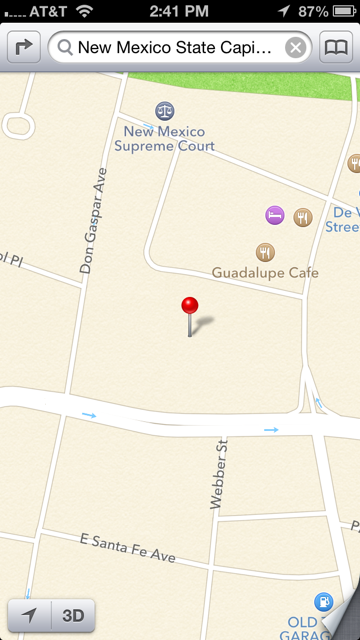
Why is this disease so important to lawmakers in New Mexico?  It turns out that the disease was common among Spanish settlers in this state in the 1580′s and has been passed down through generations of Hispanic New Mexicans.  The state has the highest population density of the illness in the U.S.  There has been little research on CCM and the bill is designed to remedy that.

More Read

30 Day Hospital Readmission Rates: Opportunity for Patient & Caregiver Engagement
How Machine Learning Is Shaping The Future Of Precision Medicine
6 Ways To Improve Your Immune System
It’s Official: Teens Prefer Texting to Talking.
World Health Needs [infographic]

Rare Disease and the Founder Effect

The situation is not unique in the world of rare disorders. Genetic disorders sometimes occur in  geographic clusters among groups with a common ancestry. Take familial hypercholesterolemia (FH), for example, a disease which is 2 to 5 times more common among Ashkenazi Jews around the world.

This group, originally from Poland and Lithuania, formed tight-knit communities to survive oppression and disease outbreaks during the middle ages.  Living in small groups in close proximity for several generations increases the risk of genetic disorders, a pattern known as “The Founder Effect.”  Along with FH, Ashkenazi Jews have a greater risk for Tay-Sachs and Gaucher disease.

Alliances that Work

What is worth noting about the bill sponsored by lawmakers from New Mexico is the model it provides for effective collaboration among stakeholders with a common interest in understanding and treating a rare disorder.  The Cavernous Angioma Research and Treatment Act is being supported by the University of New Mexico, the Angioma Alliance Scientific Advisory Board and CCM3 Action, a support group for people with the disorder.  If passed, the bill will improve healthcare access throughout the state, help underserved communities, and improve communication among medical centers, doctors, and researchers who hope to prevent brain bleeds caused by CCM.

In short, although it may have a particular geographic focus, it is still the kind of alliance that all rare diseases are striving for. One that will be good for all.

TAGGED:cerebral cavernous malformationrare diseases
Share This Article
Facebook Copy Link Print
Share

Stay Connected

1.5KFollowersLike
4.5KFollowersFollow
2.8KFollowersPin
136KSubscribersSubscribe

Latest News

Before Sterilization Begins: Why Bioburden Testing Matters -- AI-generated illustration
Before Sterilization Begins: Why Bioburden Testing Matters
Health Infographics
September 11, 2026
Hidden Cybersecurity Roadblocks That Can Complicate FDA Submissions -- AI-generated illustration
Hidden Cybersecurity Roadblocks That Can Complicate FDA Submissions
Infographics Policy & Law Technology
September 11, 2026
Smaller, Lighter, Smarter: How Inflation Is Changing Wellness Packaging -- AI-generated illustration
Smaller, Lighter, Smarter: How Inflation Is Changing Wellness Packaging
Infographics Wellness
September 11, 2026
How Roof Deterioration Affects Indoor Air Quality and the Health of Building Occupants -- AI-generated illustration
How Roof Deterioration Affects Indoor Air Quality and the Health of Building Occupants
Health
September 10, 2026

You Might also Like

Radiology

What is Interventional Radiology?

June 8, 2012

Social Media and HIPAA Compliance: What Medical Professionals Should Know

September 1, 2016
1309953786_9781780660004-web_w185_h300
Global HealthcarePublic Health

Possibly the Best #Health Advice You Could Get!

March 2, 2012
Image
Global HealthcareMobile Health

Mobile Health Around the Globe: IRC Uses Mobile to Track Mortality in Africa

December 24, 2012
Subscribe
Subscribe to our newsletter to get our newest articles instantly!
Follow US
© 2008-2026 HealthWorks Collective. All Rights Reserved.
  • About
  • Contact
  • Privacy
Welcome Back!

Sign in to your account

Username or Email Address
Password

Lost your password?