The advent of BYOD (Bring Your Own Device) and mobile/portable device use in the healthcare industry (currently coined as ‘mHealth’) is said to increase productivity, streamline processes including medical information collection and transmission, and allows people to work remotely and still have access to critical data and applications.
A report by Juniper Research estimates that mobile healthcare and medical app downloads will reach 44 million in 2012 and eventually 142 million by 2016.
[Sidenote: Although I don’t condone the citing of Wikipedia as reference, it’s worth mentioning the mHealth wiki does have a great list of applications for healthcare in the developing world, organized in charts by categories defined by the UN Foundation and Vodafone Foundation, including health education and awareness, helplines, diagnostic support, treatment support, communication and training for healthcare workers, disease surveillance, remote data collection, epidemic outbreak tracking and more. mHealth for Development PDF]
While there are mobile security measures and policies that should be documented and implemented to abide by HIPAA compliance standards for the ultimate goal of protecting personal health information (PHI), healthcare apps have flooded the industry and are here to stay.
Forbes.com published an editorial by Mobiledia that suggests “healthcare insurers are using apps to streamline patient-care systems, by connecting with and educating members, and ultimately reining in spiraling costs.”

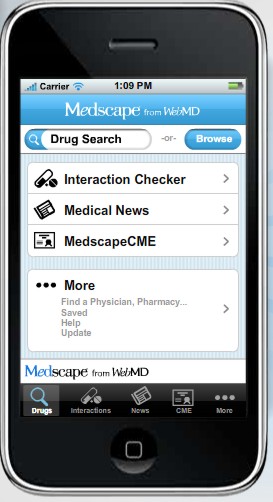
Medscape Mobile
According to Mobihealthnews.com, a healthcare investment firm headed up by former government health IT employees, Health Evolution Partners (HEP), has partnered with Verizon to collaborate on health applications and developments in the mobile health industry.
HEP invests in healthcare startups and partner venture capital firms, providing healthcare facility locators, mobile medication management workflow platforms, e-prescribing services, remote patient visits and more.
So what are some of the most popular health apps being downloaded? InformationWeek.com lists Medscape Mobile, the app of the professional medical website as one of the most popular. Medscape offers news alerts, a drug interaction checker, disease, conditions and drug reference and more, including a searchable database of over 400,000 U.S. physicians, pharmacies and hospitals.

MIM Mobile
Another app that received FDA (Food and Drug Administration) 510(K) clearance for security is MIM Mobile, a remote diagnostic imaging tool said to be HIPAA compliant and encrypted for image transfer and storage. The app allows for direct sharing and cloud storage with the app MIMcloud that stores the large images on their phones.
However, there is some opposition to the FDA’s 510(k) clearance process for medical devices, with critics accusing the process of being inherently flawed as it compares new devices to ones already on the market instead of actually proving the security and effectiveness of these devices (National Research Center for Women & Families).
As the mHealth industry grows, app audit standards, security measures and app effectiveness will continue to require endless revisions to improve overall patient healthcare while meeting national healthcare compliance standards set by HIPAA.
Not sure where to start with HIPAA? Find help in our HIPAA Resources: Policies, Procedures and Training Materials.
References:
The Future of mHealth: Healthcare Apps to Lower Insurance Costs
Next Generation Health IT Is Not Anchored to a Desk
Report: 44M Health App Downloads in 2012
9 Mobile Health Apps Worth a Closer Look
mHealth Users of Remote Health Monitoring to Reach 3 Million by 2016: Smartphones Play Leading Role
Medical Image Sharing for Patients Enabled By New MIM App