Doctors and health care providers are facing significant changes and challenges right now because of the ongoing covid-19 pandemic.
For perhaps the first time, doctors and health care providers were viewed as non-essential in many cases. The idea was to prepare hospitals for a surge of coronavirus patients, and also to prevent the spread of the virus.
Unfortunately, social distancing precautions and guidelines led many not to receive the care they might have needed, either because their doctor’s office was closed or they were afraid of catching the virus.

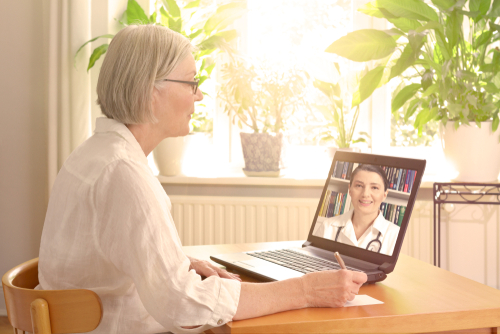
It led doctors and health care facilities around the country to start looking at ways to offer health care even without traditional office visits, meaning a significant growth in telemedicine and virtual care.
Telemedicine and virtual health care aren’t new, but the coronavirus situation perhaps led them to become more commonly used and mainstream.
For care providers, there is a question of whether or not to continue these virtual visits even as most places are lifting their coronavirus restrictions, and if so, how to facilitate them best.
The following are things for doctors and health care providers to consider as they contemplate the role of telemedicine and virtual care in their present and future work.
What Are the Benefits of Offering Telehealth?
If you haven’t yet started offering telehealth, now might be the right time. Most Americans use smartphones, and you probably already use a tablet as a health care provider. It makes it less expensive and complex to offer telehealth than ever before because the software is simple and streamlined.
- Telehealth may allow you to expand your patient base, and if you’re like many health care facilities and offices right now, you may be struggling with revenue shortfalls because of covid-19. You can connect with patients who might not be ready or able to leave their homes right now, and even customers that aren’t close to you geographically.
- The availability of telehealth can provide you with a competitive advantage over other local providers who might not be doing it yet. Patients tend to prioritize fast access to care over in-person interactions with their health care providers. Anything that’s going to make you more accessible is likely to be beneficial in expanding your patient base.
- Telehealth is a cheaper alternative to in-person office visits for patients and for you as a provider. The average doctor’s visit costs a patient $43 in lost time, not even including the medical bill itself. If you can offer telehealth it’s a financial benefit for the patient, particularly for someone who might have a chronic illness requiring regular check-ins. As a provider, you can see more patients and also reduce your no-show and late appointment lost revenue rates.
- You may find that you’re able to deliver better patient outcomes with telemedicine. For example, by offering the convenience of telemedicine, you may be able to more frequently check in with patients in a convenient way to ensure they’re complying with their treatment plan. It can also empower your patients in terms of their health.
- When you offer telemedicine, you can answer simple questions in a straightforward, fast way. You can cut down the workload for your staff and yourself and that’s going to lead to more satisfaction on the part of your employees.
What Are the Downsides of Telemedicine?
While the benefits typically outweigh the potential negatives of telemedicine, by being aware of these downsides, you can work to avoid them in your practice.
Possible cons of telemedicine may include:
- You have to ensure you’re compliant. Telemedicine regulatory requirements vary by state, and they can be complex at times.
- Patient privacy and security have to be addressed, and they should remain a top priority.
- Of course, you can’t do a physical exam with telemedicine, so some information or symptoms could be lost in that aspect. Luckily video-conferencing is extremely high-quality which reduces some of these hurdles.
- You’ll need to invest in the necessary technology and equipment to deliver telemedicine, including software and maybe hardware as well. You want to ensure you choose a platform that your staff can easily use and one that’s also going to be user-friendly for patients who might not be very tech-savvy.
Telemedicine vs. Virtual Care
The terms telemedicine and virtual care are often used interchangeably, but there are a few subtle differences to be aware of.
Telemedicine refers to a situation where you’re providing patient care without seeing the patient in person.
You may use not only audio or video, but also instant messaging. You might provide medical advice, talk about prescriptions, or discuss lifestyle changes with the patient. It’s well-suited to treating common illnesses and managing chronic illnesses.
Virtual care is a broader term that includes telemedicine but also every way that a health care provider might interact with a patient remotely.
Other Considerations
The general recommendation for most practices and providers is that you do establish an in-person relationship with a patient before you do virtual visits with them, although of course, this isn’t always the case.
Some states do require a physical relationship is established before virtual visits can happen.
You’ll also have to create your own guidelines as far as what conditions will work well in a virtual environment and which won’t.
We’ve touched on chronic conditions several times, and telemedicine is good for this because people with chronic conditions like diabetes often have to go to doctor visits frequently to check-in. With chronic diseases, the patient should be stable for telehealth visits, however.
Another place where telemedicine works is for conditions requiring self-management, where the care provider offers support. For example, smoking and obesity are two cases where you might check in with patients virtually to see how they’re doing.
Finally, you’ll also need to ensure you’re responsibly prescribing medicine as part of your telehealth work. There are certain drugs that shouldn’t be prescribed via telehealth, including controlled substances and even antidepressants. If these are prescribed by telemedicine, there needs to be close supervision for side effects.