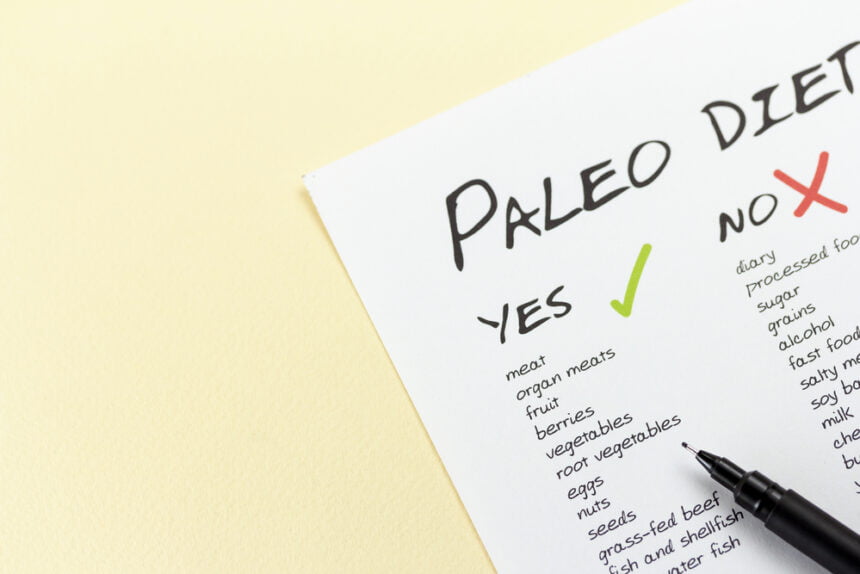
Whenever we start a new diet, we want to make sure we’re doing it right and getting the fullest possible benefits of our new way of eating. This can, at times, be a challenge, as we may not be quite sure what’s off-limits and what’s okay to eat. If you’re just looking to start a Paleo diet, this article will help you identify the items that should be removed from your menu, and the ones that need to find a place on your plate.
Paleo diet: essential principles
The main principle of the Paleo diet is eating like our hunter-gatherer ancestors once ate. In the broadest terms, this means not eating anything that has been processed and filled with artificial additives and flavors, and stocking up on real food – meats, veggies, and fruits. There will be some surprising items on this list, but don’t make the mistake of believing that the Paleo diet is boring and restrictive: you can always make something tasty by using Paleo recipes.
Foods you can eat on the Paleo diet
The list of foods you can eat on the Paleo diet is long and varied:
- Meat: preferably grass-fed meat, as it is the best choice for you and the environment, as well as the closest to what our ancestors ate. We’d suggest going for chicken, beef, turkey, and pork.
- Fish and seafood: preferably wild-caught fish, if you have access to it. We’d suggest adding salmon, tuna, and cod to your menu. But you can also go for the less popular fish items, as this is also good for the planet.
- Vegetables: anything from broccoli to cabbage and spinach to cauliflower, the list goes on. Try to buy your veggies in season, and locally.
- Fruits: apples, bananas, berries, whatever you’d like most. There’s an argument to be made against citruses, but you can eat them if you’d like.
- Nuts and seeds: almonds, hazelnuts, macadamia nuts, sunflower and pumpkin seeds, etc. The one thing you should probably not eat are peanuts, but even if you do, no harm done.
- Oils and fats: go for olive, walnut, macadamia, avocado, and coconut oil
- Eggs: free-range, if you can get them
When it comes to your drink of choice, sticking to plain water is the best option. On the other hand, as you can’t just drink water all the time, adding tea and coffee to your Paleo diet is considered all right. Choose green tea if you like the taste, and as for your coffee, make sure it is not the kind that’s overly-processed and filled with added milk and sugar.
Food you shouldn’t eat on the Paleo diet
If you want to really stick to your Paleo diet, these are some of the foods you should be avoiding:
- Grains: including bread, pasta, and cereals. This is often the step most people have difficulties with.
- Legumes: including beans, lentils, tofu
- Sugar and artificial sweeteners: all pies, pastries, ice creams, chocolates, soft and fruit drinks, and basically any modern food item that has sugar in it
- Refined vegetable oils
- Processed foods
- High-fructose corn syrup
- Alcohol
- Dairy and all food items that contain dairy (this is another item on the list that most dieters have an issue with)
- Certain oils: like soybean, sunflower, corn, grapeseed
- Trans fats: found in margarine and other processed foods
While this list might sound a bit restrictive, it is still perfectly logical: our ancestors did not have access to the modern production methods required to produce most of these foods.
Cheating on the Paleo diet
While the Paleo diet is not as restrictive as some others, it still prevents you from eating some of the foods we now consider a staple in our diets (like dairy, bread, and pasta). However, you can choose to modify your own version of Paleo to suit your lifestyle and your own needs. If you eat pure Paleo 80 percent of the time, and cheat with some of the items from the ‘don’t eat list’ 20 percent of the time, your body will still experience the benefits Paleo brings to the table. However, this does not mean you are allowed to jump straight into the highly-processed isle of the supermarket, and binge on sweets and sodas 20 percent of the time. Rather have a glass of wine, eat a pizza, eat some pasta on occasion. The entire point of the Paleo diet is to cut out the harmful foods that modern man has created, and that are harmful to our health. Sugars and artificial everything don’t provide anything your body needs, and you should stay clear of them, Paleo or no Paleo. Give the diet a try for a couple of weeks and see how you feel afterward. Don’t expect to see any weight, mood, or health changes overnight; but if you stick to it for a while, you will be able to tell if it’s the right choice for your way of life or not.