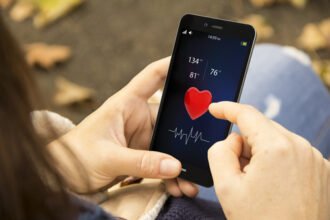
You might be surprised to learn how wide your digital footprint is these days.
It is worth getting up to speed on this issue by reading Jane Sarasohn-Kahn‘s latest report for the California Healthcare Foundation, entitled Here’s Looking at You: How Personal Information Is Being Tracked and Used. I enjoyed speaking with Jane about these issues as she was researching and writing the report.
Some highlights:
You might be surprised to learn how wide your digital footprint is these days.
More Read

It is worth getting up to speed on this issue by reading Jane Sarasohn-Kahn‘s latest report for the California Healthcare Foundation, entitled Here’s Looking at You: How Personal Information Is Being Tracked and Used. I enjoyed speaking with Jane about these issues as she was researching and writing the report.
Some highlights:
1. Most people are unaware that they are leaving their personal data behind and that some of this information is not protected by HIPAA. Data brokers are able to build dossiers on individuals to sell to marketers, while consumers lack recourse to obtain or correct their information.
2. Clinical researchers, health plans, and others use the information to enhance individuals’ health as well as to benefit public health. Larger and speedier clinical trials are made possible by the quantity of data available.
3. Different types of information — such as historical claims data and consumer-generated data — can be combined and used for statistical modeling for health or financial risk-profiling. Such information is purchased by hedge funds, hospitals, large provider networks, payers, pharmaceutical companies, and others.
4. Even when given an opportunity, most consumers are not vigilant about protecting their data; many are willing to share data to further their own health or to serve public health goals.
 The key takeaway is that the collection and collation of our data exhaust is not universally good or bad, and that it is important to be aware of how different data points may be used and combined by the original collector of the data, by data brokers, and by data brokers’ customers, so that we make informed decisions about how our data is used, by whom, and to what ends. In order to make these informed decisions, of course, the relevant information needs to be presented to us clearly and in a timely manner.
Much of the use is well-intentioned (e.g., the health care system that subscribes to data services in order to match broader data sets to patient data in order to offer better-targeted health and wellness programs) and individuals can proactively contribute their data to benefit research, though of course other uses are intended to protect the data purchaser against the risk posed by the data subject (e.g., the mortgage lender that uses health data as part of its scoring of a loan application). Today, consumers are not given sufficient information at the appropriate time to inform the decisionmaking process about whether to sign up for the customer loyalty program at a particular retailer, or to take the health insurance discount in return for enrollment in the wellness program (often of dubious value to the individual) that ends up scraping patient data.
Caveat emptor.
data / shutterstock