It’s no secret that social media has transformed our lives significantly: we are able to track down long-lost friends, we can inform all of our peers about our whereabouts, and we may even find the love of our life online. Now, social media even plays a growing role in healthcare.
It’s no secret that social media has transformed our lives significantly: we are able to track down long-lost friends, we can inform all of our peers about our whereabouts, and we may even find the love of our life online. Now, social media even plays a growing role in healthcare. About 20% of Americans already search for medical content on social media sites, according to a 2011 National Research Corporation survey. Furthermore, a 2012 report by the Pew Internet Project found that half of American adults between the ages 50 and 64 are using social media sites, which is substantial as this also is the prime age group of caregivers. There is also a rising demand for health social networking sites like Sermo or PatientsLikeMe, which are virtual communities that enable people to connect through common problems and share health data.
As a matter of fact, various healthcare organizations are seeking to incorporate social media technology as well. For example, Cedars-Sinai Health System in Los Angeles is testing a new cloud-based secure social networking platform developed specifically for healthcare. Cedars-Sinai, which encompasses an 896-bed medical center, decided to participate because it wanted a secure and flexible method to incite collaboration regarding a variety of subjects. “Part of the challenge with social networking is figuring out if you are in a trusted community,” states CIO Darren Dworkin. The Connect platform from New Wave Connect allows Health Insurance Portability and Accountability Act (HIPAA) specialists to exchange ideas about particular privacy policies or practices with their peers at other organizations.
While social media can offer great ways to communicate health-related issues more effectively and healthcare organizations usually take extensive precautions regarding their social media management of medical information, many healthcare professionals are still wary of social media’s impact on the field. A report published in the 2011 edition of the Journal of General Internal Medicine found that 79% of medical professionals expressed concern about maintaining patient confidentiality when using an online social network. It should be obvious that the sharing of sensitive data like medical information on the Internet is a very delicate matter. Considering that 81% of Internet-initiated crimes involve social networking sites and the vast majority of Americans is (increasingly) using such platforms, people should be especially careful when it comes to publicly sharing personal health data.
More Read

According to an article published last year in the Journal of the American Medical Informatics Association, the use of health social networking sites harbors significant privacy and security risks. First, such sites usually keep the majority of their users’ profiles permanently. Once people reveal personal health data to receive/give counsel or medical professionals disclose patients’ data to share advice, they can’t control how long this information will be accessible online. Moreover, since anybody can join these sites, anybody can view this sensitive content. The data might be shared with third parties without users’ explicit consent or could be retrieved by scam artists who create fake profiles to obtain information from unsuspecting users. The accumulated health data could be misused/exploited for non-medical uses. Innovative data mining and health informatics technologies can create “digital dossiers,” which would be highly valuable to companies looking to market a product or to employers intending to deny a job. Lastly, these dossiers are an attractive target for hackers and identity thieves. One loophole in the system, one error by the site operator or one misuse by any of the other users, and the information is compromised.
These security and privacy issues surrounding the disclosure of medical information on social media platforms need to be addressed sooner rather than later, especially since such practices are becoming increasingly common. In the US, electronic health records are legally protected by the Health Insurance Portability and Accountability Act of 1996 (HIPAA) privacy rule and the enhanced Health Information Technology for Economic and Clinical Health (HITECH) Act. Yet, the voluntary release of personal health data by individuals on social networking sites is not regulated or protected by the HIPAA/HITECH. For now, both patients and medical professionals ought to be extremely careful about posting any personal health data online and should acknowledge the possible ramifications of revealing such sensitive information on the Internet.
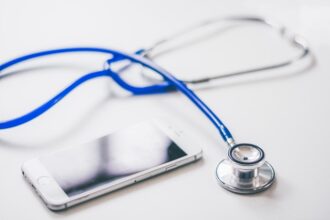
(Healthcare and social media / shutterstock)