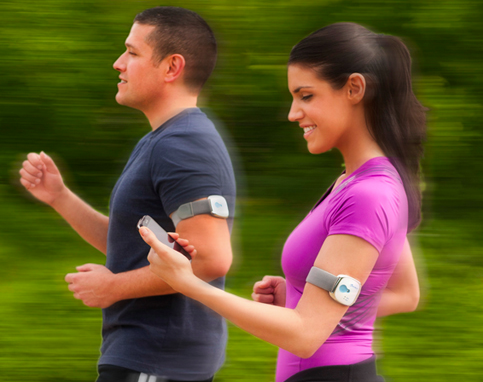
Editor’s Note: I really wanted to open this series with a post on the Quantified Self (QS) movement since I think it is important and not too many of us are familiar with it (me included)! Joe Kvedar is one of HWC’s distinguished contributors and co-founder of Hea!thrageous, a website dedicated to health engagement and self-management through technology. I asked Joe to help with this topic and he and his colleague, Gina Cella, were good enough to share this post of Joe’s that does a great job of explaining what QS is and how it can help keep people healthy. Thank
Editor’s Note: I really wanted to open this series with a post on the Quantified Self (QS) movement since I think it is important and not too many of us are familiar with it (me included)! Joe Kvedar is one of HWC’s distinguished contributors and co-founder of Hea!thrageous, a website dedicated to health engagement and self-management through technology. I asked Joe to help with this topic and he and his colleague, Gina Cella, were good enough to share this post of Joe’s that does a great job of explaining what QS is and how it can help keep people healthy. Thanks Joe and Gina!
In 17 years of swimming in the waters of connected health, the single biggest insight I’ve gained is that individuals, when given objective information about their health, have the capacity to change their behavior. I never dreamt how engaged and committed patients could be in managing their own health. I know it sounds silly, but it’s a side effect of training as a health professional. We undervalue the opportunity to engage patients in self-care.
The most useful construct for thinking about this phenomenon is the idea of feedback loops. When you are driving down the road and spot one of those digital displays showing your speed as a flashing yellow light (compared to the speed limit), do you slow down? Most folks do. That is odd since you are looking at redundant information – your speed is on your speedometer and you know the speed limit. Somehow the juxtaposition of the two and the flashing are effective tools to change your behavior. That is a terrific illustration of the power of feedback in connected health.

Feedback loops have four important components (this is covered in more detail by my friend Thomas Goetz in a recent issue of Wired): evidence, relevance, consequences, and action. In our experience, with connected health, it boils down to three things: active reflection, the sentinel effect, and the ability to take action. Let me unpack each of those.
Active Reflection
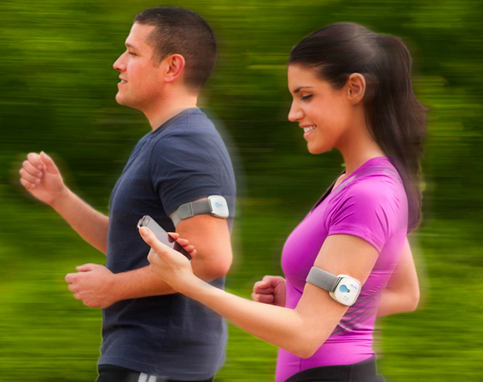
I’ve been impressed by the insights that can come from reflecting on objective health information. I wear a BodyMedia armband, which calculates activity level and caloric output among other things.
I like to cycle for exercise. Last time I checked, an hour of cycling around town burns about 275 kCal. This time of year, I’m forced to spend weekend time on another activity I like less well, leaf raking. I used to really resent the time I’d spend raking leaves because I thought I should be cycling in order to get exercise. Imagine my surprise when I checked the caloric expenditure for yard work and found it to be ~ 400 kCal. I realized my own ‘go to the gym equivalent’ in yard work and I don’t hate it so much any more. Our patients with diabetes, hypertension and congestive heart failure talk about insights like these every day. Eat a salty food today and gain a pound or two of fluid tomorrow. Drink too much tonight and see your blood pressure go up tomorrow. Karen Federico, a nurse with Partners Health at Home, tells the story exceptionally well in this video:
The Sentinel Effect
This is important. About 10% of the population can achieve behavior change on active reflection alone, but the rest of us need some other motivators. For many the idea that someone (particularly their healthcare provider) is going to see their data and hold them accountable to it, is powerful motivation to be more adherent to the program. As one of our heart failure patients, George, puts it, “I can’t fudge because I can’t eat fudge!” He hastens to add that he feels comforted knowing that, “trained professionals are looking at my information on a daily basis and available to take care of me at a moment’s notice.” Here is a link to a video of George telling this story. The sentinel effect is powerful. It’s what makes connected health – in the context of healthcare provider management of chronic illness – so powerful.
The Ability To Take Action
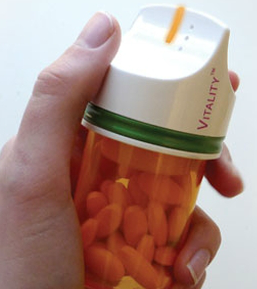
Of course feedback loops would be useless without empowering individuals to change their behavior based on the insights they gain from pondering their health data. We measure our success in this regard by looking at healthcare outcomes in the populations of patients participating in our programs. Here are three brief examples. A glowing pill bottle that reminds patients to take their medication and records that the medication was taken increased medication adherence by 68%, compared to a control group.
Diabetics engaged in active home glucose monitoring and sharing those results with their provider, via the Internet, showed a combined 1.5% drop in HbA1C. During a six-month home monitoring program, patients with high blood pressure who monitored their blood pressure and received automated coaching feedback had a significantly lower blood pressure than those in a control group. It’s clear that feedback can lead to clinically meaningful behavior change. One of our pharmacists, Amy Bilodeau, does a nice job of explaining how this works with her patients in this video:
Our Patients Are Our Largest Untapped Resource
Chronic illness is on the rise. The baby boomers are entering their high maintenance healthcare years. We’re in a debt crisis and we MUST bring down the costs of healthcare. Our profession has reacted by pushing electronic records, the patient centered medical home, and accountable care. All of these are worthwhile, but I’ve yet to see a concerted effort to bring patients into the process.
Start tracking something (blood pressure, steps, weight). Engage a coach and make some commitments. Share your insights with your doctor and move the conversation forward.